



Cure
Overview
Nell Smircina of Novastone Capital Advisors, and Tierney Saccavino-Payne of TSP Communications answer questions that are always top-of-mind for founders: from communicating setbacks to planning a raise.
Biotech founders often move quickly through scientific milestones but face a different set of challenges when communicating with investors. Questions around timing, valuation, risk, transparency, and the expectations that shape investor relationships tend to surface early and then continue as companies grow.
Many founders also discover that investor relations is not only about preparing materials for a raise, but about building credibility, sharing information responsibly, and showing a clear path forward in an environment where uncertainty is unavoidable.
To help address common concerns, Cure spoke to two IR experts to outline what startups most often want to know and how they typically guide teams through these issues.
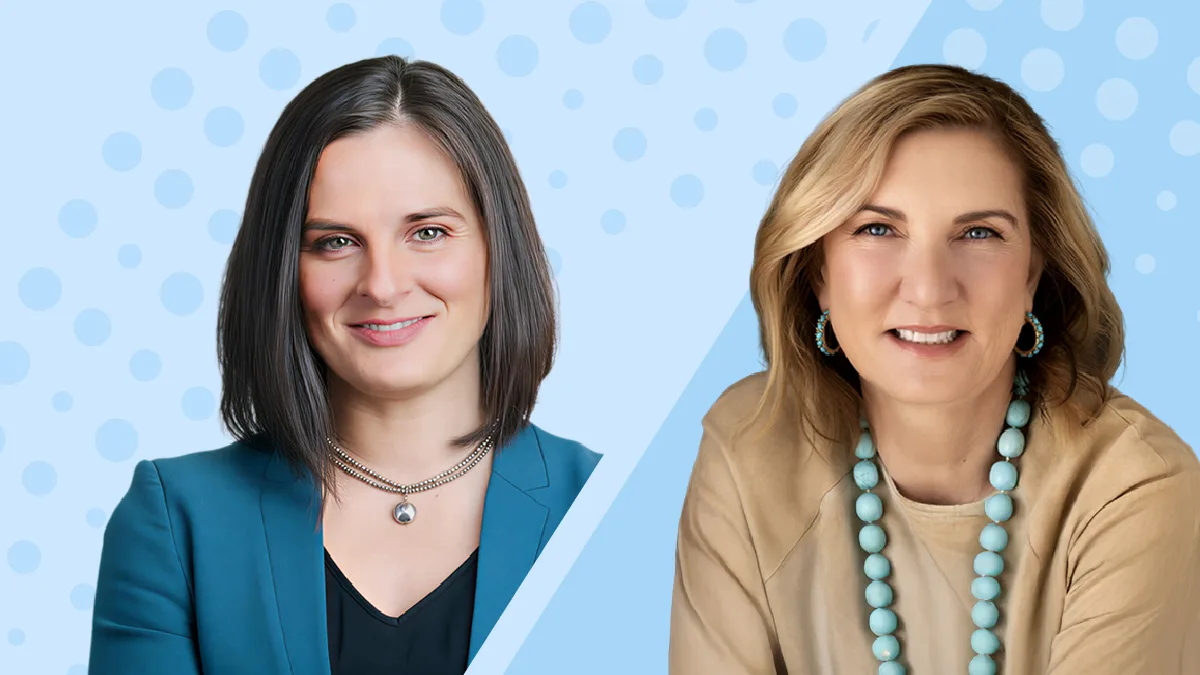
Nell Smircina, DAOM, Search Fund Principal at Novastone Capital Advisors, and Tierney Saccavino-Payne, President of TSP Communications and former Executive Vice President of Corporate Affairs and Investor Relations at Acorda Therapeutics for 25 years, shared their insights on founders' most burning questions.
1. What Do Investors Care About Most?
Founders often assume investors care most about the science or product. Smircina said investors are ultimately assessing people and execution. She noted that clarity around the team, the business model, and near-term milestones is just as important as IP.
“You want to show that you are a strong founder with vision but not that the business is overly dependent on you,” Smircina told Cure. “There is a difference between being essential to launching and being a bottleneck to scaling.”
RELATED: What Not to Say to Investors: 5 Messaging Mistakes That Can Derail Your Pitch
2. How Should We Share Bad News?
When a clinical trial fails, a patent is not secured, or layoffs occur, it can be difficult to know how to communicate negative updates. Working in biotech can feel like moving from one crisis to another, said Saccavino-Payne.
“The best approach is clearly to tell the truth and get the news out about the whole story right away. This is how you build credibility,” she said. “Your audiences, whether it is investors or your employees or your patients or your physician community or the general community, are more likely to believe your good news when you are really honest about your bad news.”
She added that if a press release headline highlights a positive secondary outcome, readers will assume the primary outcome did not hit.
“It is a more credible approach to just rip the Band-Aid off and tell the truth. Do not bury the part about the primary outcome not working in the second or third paragraph,” she said.
3. When Should We Raise Capital, and How Much?
Rather than focusing on optimistic timelines, Smircina encouraged founders to plan capital needs around realistic milestones.
“A lot of founders want to raise before they have proven they can use capital effectively or without understanding how dilution plays out over time,” she said.
The timing and size of a raise depend on where a company is in its development milestones. Founders should raise when they can show progress that reduces perceived risk, such as strong preclinical data.
RELATED: How to Raise Pre-Seed Funding, From Biotech Founders Who’ve Done It
4. How Do We Explain Valuation?
Because biotech valuation is tied to risk reduction and milestones rather than revenue, founders should focus on where the company sits on the development risk curve and how it has de-risked the science, clinical pathway, and commercialization plans.
“Founders often anchor to past raises or internal expectations. I help them reframe valuation around the future value they can create and the credibility of their plan, not just how much they have spent or how long they have been building,” said Smircina.
5. How Do We Position for Acquisition?
Professionalizing the company ahead of any potential sale means tightening operations, clarifying the business model, and documenting founder-held knowledge in a way that creates a repeatable system.
“There is a fine line between being a visionary founder and building a business that is sustainable without you,” said Smircina. “Buyers want confidence that the company will keep running even if you step away.”
6. How Do We Discuss IP Without Oversharing?
This can be a delicate balance in biotech. It is often best to focus on strategy, such as how the company is protecting and commercializing its IP, rather than providing technical specifications.
“Investors want to see you have thought it through even if they cannot see every detail yet,” said Smircina.
Saccavino-Payne added that while some aspects remain unknown as IP is pending, founders can highlight elements they do have confidence in.
“Whether it is a manufacturing method or orphan drug designation that gives you a particular period of exclusivity or some sort of manufacturing superiority in your process that is proprietary to your company, share these,” she said.