

Cure
Overview
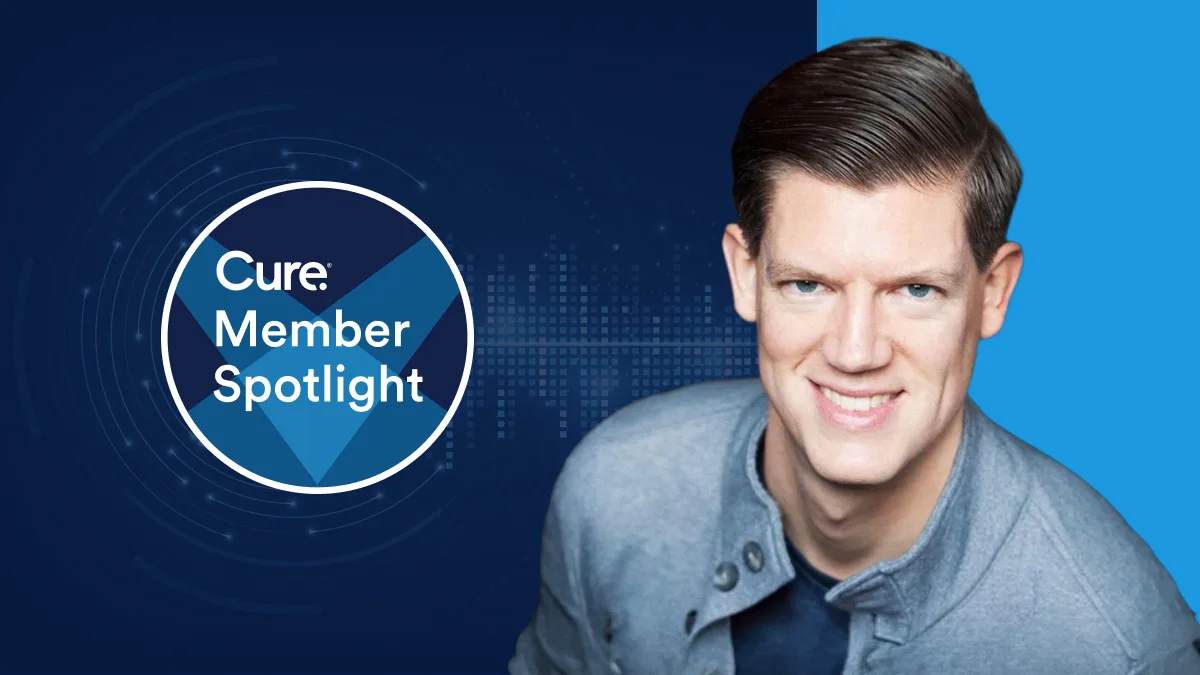
A Q&A with Irene Rombel, Co-Founder and CEO of BioCurie, on why manufacturing—not discovery—is the real bottleneck in cell and gene therapy, and what it takes to build an AI-driven software company at the frontier of genomic medicine.
Welcome to our Member Spotlight series, where we highlight the groundbreaking work of the companies and individuals in Cure’s community.
Meet Irene Rombel, PhD, Co-Founder and CEO of BioCurie—one of the earliest members of the Cure community. The company develops AI-driven software to tackle one of biotech's most persistent problems: the manufacturing bottleneck that keeps cell and gene therapies from reaching the people who need them.
BioCurie's work has earned recognition on multiple fronts, including securing a recent $9.3 million ARPA-H contract, as well as winning the top awards in Cure's inaugural Xchange Challenge: Health AI for Good in 2024, and the global King Faisal and Davos of Healthcare Innovation Challenge in 2025.
Rombel spoke to Cure about betting on process over discovery, how she navigated the classic founder chicken-and-egg dilemma, and what comes next as BioCurie prepares to launch its first commercial product.
When you started BioCurie, what convinced you that manufacturing, not discovery, was the real bottleneck worth building a company around?
In 2021, there was a growing wave of more than 4,000 cell and gene therapies in preclinical and clinical development. However, it was clear to me that process development and manufacturing would be major bottlenecks because of the high complexity of these next-generation medicines — and drugs are not reaching as many patients as they could because of these issues. In essence, the paradigm for traditional drugs and biologics was flipped. That challenge, and opportunity, inspired me to start BioCurie. Today, the cell and gene therapy manufacturing market is growing at a 28.8 percent rate and is projected to reach $142 billion by 2032.
You're building in a space that's technically complex and often overlooked by investors. How did you frame the story early on to get people to understand the opportunity?
We were able to point to data showing that all gene therapy products had long delays between regulatory approval and actual patient availability, and we were able to estimate the costs associated with those delays. BioCurie operates in a highly technical space, where AI and data modeling intersect with genomic medicine manufacturing. However, the business case is simple: we are developing intelligent software that enables biopharmaceutical companies to produce advanced therapies that are faster, better, and more cost-effective. This is a win for companies because it means higher net present value per product, and a win for patients because it means greater access to lifesaving therapies.
BioCurie recently secured a $9.3 million ARPA-H contract. What did it take to get to that point, and how does that kind of non-dilutive funding change how you build the company?
We proposed a bold vision for transforming gene therapy manufacturing. To get to that point, we invented a first-in-class technology, filed the intellectual property, implemented the technology in a prototype software platform, and assembled a consortium of world-leading organizations developing and manufacturing gene therapies. The ARPA-H funding allows BioCurie to complete development and release its first commercial software product much faster than would otherwise have been possible, which ultimately means more lives can be saved.
You've managed to secure early customers and strategic partnerships relatively quickly. What did you prioritize to get that initial traction?
When looking for early customers, we prioritized organizations with highly capable scientists and engineers, strong gene therapy manufacturing datasets, and a shared long-term vision that gene therapy will play an important role in mainstream medicine.
A lot of founders struggle with timing—when to build, when to sell, when to raise. How have you approached those tradeoffs so far?
You have captured a conundrum that many founders face: a classic chicken-and-egg scenario. Many potential investors do not want to invest in your company unless it already has a commercial product and customers. But without that initial investment, it is difficult to build the product and customer base in the first place.
To get around this Catch-22, we invested our own money and secured non-dilutive grant funding, which we used to develop the initial software prototype. That prototype then helped us to recruit an early customer and generate revenue. In turn, that allowed us to raise a seed round to help move the prototype toward an AI-driven software product suitable for broader commercial release.
You've been very focused on access and cost from the beginning. How do you balance that long-term mission with the realities of building a venture-backed company?
We have focused not only on access and cost, but also on time and quality. Cost, time, and quality are not a zero-sum game. Our technology is developed to simultaneously reduce costs, reduce process development timelines, and improve quality at the same time.
Our long-term mission is to enable anyone who could benefit from cell and gene therapies to have access to them. To achieve that mission, we developed both a compelling business case and a new product category: AI-driven software for genomic medicine development and manufacturing. Early on we created a precise roadmap to build and launch specific software products, with clear value-creating milestones for future stages of venture funding. As the leader of a disruptive product category addressing a fast-growing market, BioCurie represents a compelling investment opportunity.
As BioCurie moves into its next phase, what are you most focused on right now, and what role has the Cure community played in supporting your growth so far?
Right now, we are primarily focused on developing our first commercial software product for gene therapy production, with the goal of launching later this year. The Cure community has played an important role in raising our visibility with the healthcare industry and investors, connecting us with opinion leaders and decision-makers, and giving us the opportunity to participate in the global King Faisal and Davos of Healthcare Innovation Challenge, which we won. Cure has helped put BioCurie on the global map of Health AI for Good.