



Overview
A clear vision can set a biotech’s direction, but founders succeed when that vision adapts to new data, market shifts, and investor expectations. Greg Moss of Evommune explains why flexibility guides smarter strategy, stronger alignment, and better long term outcomes.
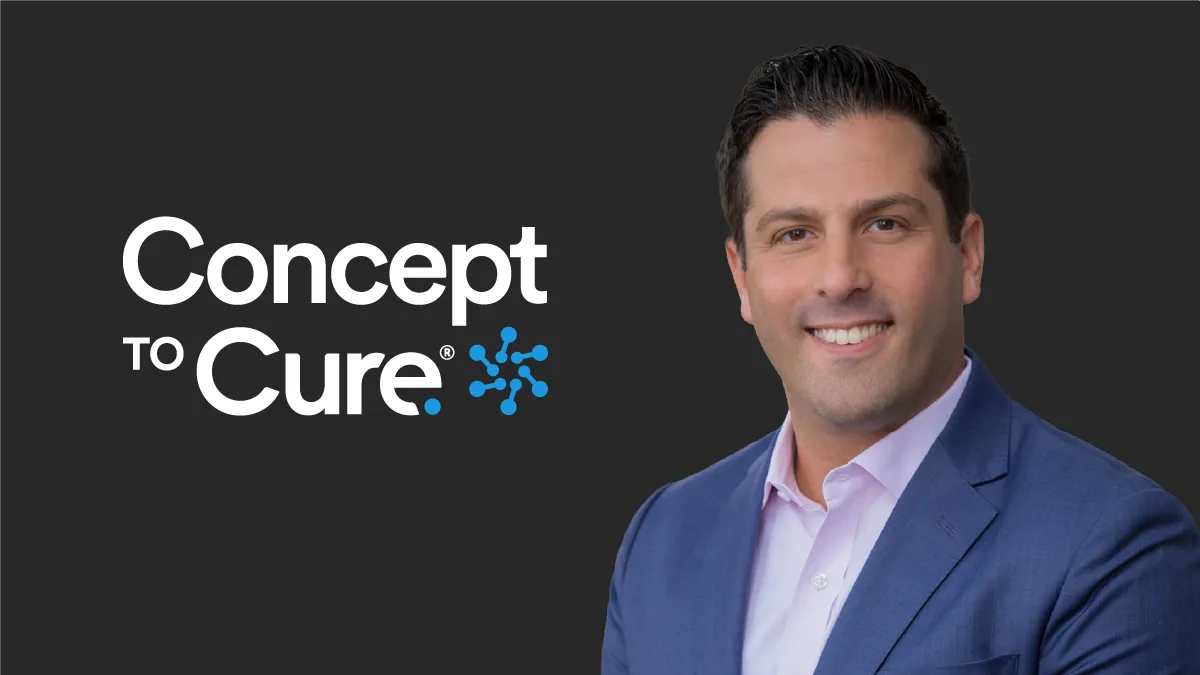
Biotech companies often start with a clear sense of purpose. They know the unmet need they want to address, the science they believe can move the field forward, and the potential impact their work could have on patients. Greg Moss, the Chief Business and Legal Officer of Evommune, argues that this early clarity matters, but only if the vision behind it stays flexible.
A biotech business plan, he explains, begins with a guiding principle set by the CEO, founders, or scientific leaders. That principle holds the organization together. It informs how companies raise capital, plan their clinical pathway, and stay aligned with investors.
But Moss is clear about one thing: Vision cannot stay fixed. A biotech company cannot evaluate its work in a vacuum. If the vision isn’t evolving with the external environment, the company risks moving forward with work that no longer reflects what patients need or what makes sense competitively. That is why he emphasizes that vision is “evolutionary, not revolutionary.”
For more, view the entire sixth lesson of our Concept to Cure course, Business Model Development for Biotech. All lessons available exclusively to Cure members.
How an Adaptive Vision Guides Strategy, Risk, and Alignment
Moss explains that his role at Evommune has involved keeping this balance front and center. As development moves forward, the company has to consider scientific progress alongside commercial and risk factors. Looking only at research or only at internal progress can create blind spots. A wider view ensures that the work remains relevant and necessary as conditions change.
This adaptive approach also shapes how a company builds its portfolio. Moss notes that good organizations avoid relying on a single “shot on goal.” They spread opportunity across multiple programs, creating different paths to benefit patients. The vision established early in the company’s life eventually influences which programs it chooses and how it allocates its resources.
An evolving vision also supports stronger alignment with investors. According to Moss, revenue is not the benchmark investors use in biotech, since companies continually cycle capital back into research and development. Instead, investors look for value inflection points that reflect a program’s potential. If the vision is outdated or unclear, those inflection points lose definition and misalignment grows. A vision that adapts keeps the company and its investors focused on the same long term goals.
Connecting Vision to Real-World Milestones
Evommune’s recent IPO offers a real world moment that underscores this approach. The company recently announced the closing of its initial public offering of 10,781,250 shares at $16 per share, generating gross proceeds of about $172.5 million. Its shares began trading on the New York Stock Exchange under the symbol EVMN.
This milestone reflects the type of long term thinking Moss describes. A company reaches this stage by holding onto a clear vision, revisiting it as conditions change, and keeping scientific, commercial, and risk considerations in view at every step.
“A successful biotech IPO occurs when there is a great team, aligned with supportive investors, and a clear timeline to meaningful near-term catalysts,” said Moss of the company’s milestone. “Evommune has three clinical data readouts coming up in 2026, and has financed itself to go forward with those programs in the upside, to pivot and advance to new discovery opportunities, alternative indications, or business development in other scenarios. We are steadfast in the view that you need to risk-manage a portfolio, as that will give you the best shot of advancing a medicine to approval for patients in-waiting.”
Concept to Cure Video Series
We are proud to introduce Concept to Cure, our 12-part video series built for healthcare founders and operators turning breakthrough ideas into real-world impact.
Across these expert-led lessons, biotech CEOs, venture investors, and policy leaders share the frameworks and hard-won lessons that move innovations from early concept to clinic and beyond.
From validating your market and building investor-ready business models to navigating FDA approvals, scaling commercialization, and leading high-performing teams, each episode distills the practical insights entrepreneurs need most.
Concept to Cure lessons are available exclusively to Cure members.