





Cure
Overview
A Q&A with Larry Raoul James, CEO and President of MindLab, on why the opioid crisis was a drug design problem, and what it takes to build a next-generation pain therapeutic in a challenging category.
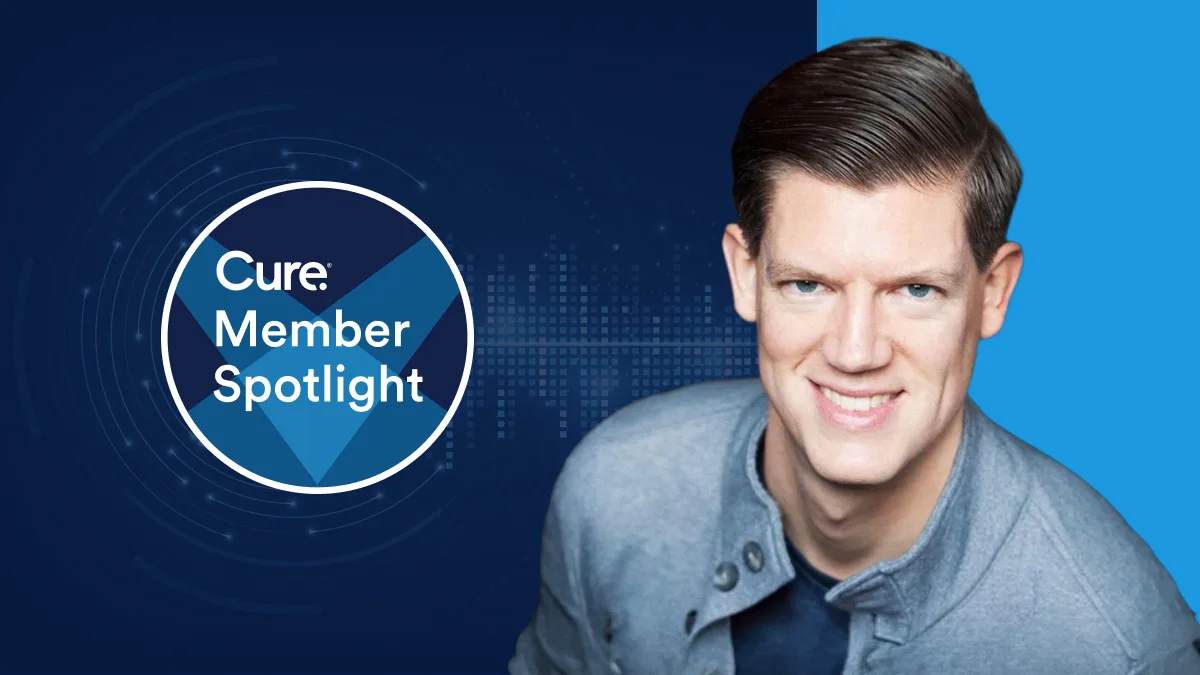
Welcome to our Member Spotlight series, where we highlight the groundbreaking work of the companies and individuals in Cure’s community.
Meet Larry Raoul James, CEO and President of MindLab, a biopharmaceutical company developing next-generation pain therapeutics designed to deliver effective relief while addressing the abuse potential that helped fuel the opioid crisis. MindLab's lead program, MLB-001, is a morphine-class analgesic designed to deliver comparable pain relief at lower doses, longer duration, and reduced abuse potential. The company is advancing toward clinical trials.
James spoke with Cure about building in one of medicine's most complicated categories, what his preclinical data shows, and how he thinks about the path to clinic.
Pain medicine has been at the center of one of the worst public health crises in modern history. How does MindLab think about that legacy, and where does your MLB-001 fit into it?
Pain medicine has been shaped by one of the most difficult legacies in modern healthcare. The opioid crisis did not only expose the risks of misuse and dependency; it also created a climate of fear around pain treatment itself. Patients have suffered from stigma, hesitation, and inconsistent access to effective relief, while physicians have had to practice under scrutiny and uncertainty. MindLab sees that as the central challenge: how do you preserve the efficacy needed to manage severe pain, while changing the profile in ways that can reduce abuse potential and restore confidence in treatment? That is where our MLB-001 fits, as an attempt to rethink that balance entirely.
The field has tried and failed to develop opioids that work without driving misuse. What makes MLB-001 different?
Historically, many efforts in this space have focused on making products harder to misuse rather than fundamentally changing their clinical profile. Our MLB-001 is designed to alter how pain relief is experienced—extending duration, reducing dose exposure—and shape the central nervous system response in a way that may reduce reward signaling. In that sense, the goal is not to manage misuse after the fact, but to address some of the underlying drivers that contribute to it. If successful, that represents a shift in how the field approaches the problem.
Walk us through what your preclinical data actually shows, and what would you need to see in the clinic to feel confident?
Our preclinical data points to two key observations that are important when viewed together. First, we see analgesic activity comparable to morphine, along with a longer duration of effect that appears early and is sustained over time. Second, we see signals suggesting a differentiated central nervous system profile, which is particularly relevant when thinking about reward and reinforcement. The critical question now is translation. In the clinic, we are looking for confirmation of efficacy, validation of the duration advantage, and a clear understanding of safety and CNS effects. If those align, the profile becomes meaningfully differentiated.
How are you thinking about regulatory strategy, and where does the FDA stand on this class?
The regulatory landscape in pain has evolved significantly. There is clear recognition that pain remains undertreated, but also that any new therapy must demonstrate not only efficacy, but a well-characterized safety and misuse profile. Our approach is to be closely aligned with that framework—generating early data around abuse-related endpoints, understanding dose-response, and building a program that supports responsible use. The bar is high, but it is also clearly defined, and we view that clarity as constructive.
The opioid crisis made a lot of investors permanently cautious about pain therapeutics. How do you make the case for MLB-001?
The caution in this category is understandable, and in many ways appropriate. It reflects the history of the space. For us, the focus is on clarity: does the data support a differentiated profile, and does that profile address a real clinical need in a way that clinicians can trust? There remains a significant unmet need for effective pain management, particularly in acute and high-need settings. The question is not demand, but confidence. Our role is to generate the kind of data that can support that confidence.
You brought in AI and digital twin modeling through your partnership with GNQ Insilico. What does that change about how you're building the clinical strategy?
Modeling and simulation allow us to make more informed decisions earlier in development. Drug development is fundamentally about reducing uncertainty, and tools like digital twin modeling can help us explore dosing strategies, patient variability, and potential outcomes before entering the clinic. It does not replace clinical evidence, but it can improve how we design trials and allocate resources. In that sense, it is a tool for precision and efficiency.
As you join the Cure community, what kinds of connections or conversations would move the needle most for MindLab right now?
At this stage, the most valuable interactions are those that accelerate execution—particularly across clinical development, regulatory alignment, and strategic capital formation. What makes the Cure community interesting is its ability to bring together investors, operators, and domain experts in one ecosystem. The most impactful conversations for us are those that sit at that intersection and help translate strategy into forward momentum.