




Cure
Overview
A Q&A with Matt Lewis, CEO of Transformental, on why most AI transformations fail for human reasons, how healthcare organizations build “brain capital,” and what it takes to introduce AI responsibly in high-stakes environments.
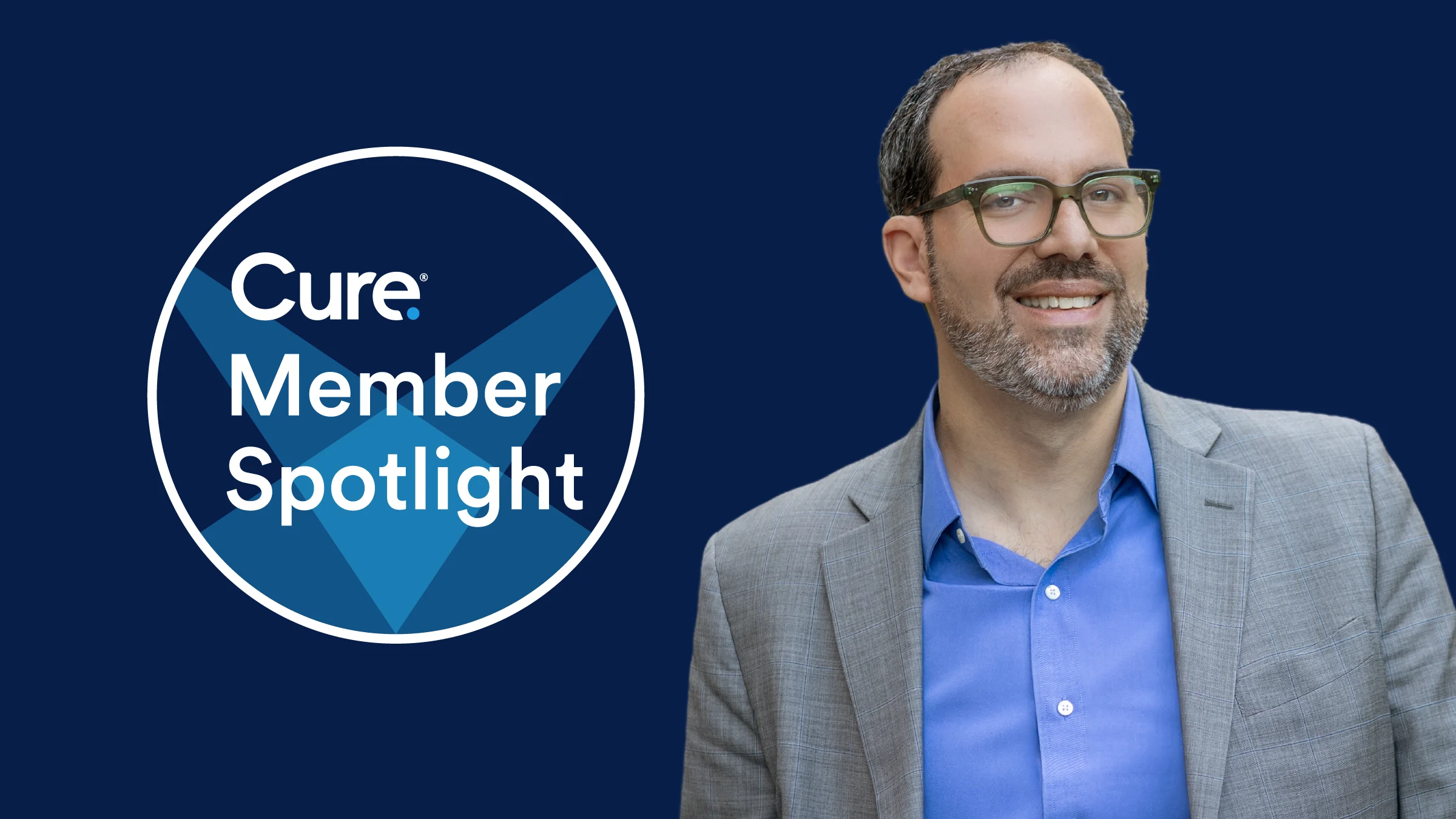
Welcome to our Member Spotlight series, where we highlight the groundbreaking work of the companies and individuals in Cure’s community.
Meet Cure member Matt Lewis, CEO of Transformental, a consultancy working with healthcare and life sciences organizations to navigate AI-driven transformation. The company focuses on the human side of technological change, helping institutions build the leadership, behavioral, and cultural capabilities needed to integrate AI responsibly into complex, high-stakes environments.
In this Q&A, Lewis breaks down Transformental’s approach, how organizations can prepare their workforce for an AI-augmented future, and why transformation in healthcare requires aligning technology with culture, governance, and human judgment.
What is Transformental, how did it come to be, and what problems are you trying to solve?
Transformental is a transformation consultancy building for what we define as The Age of Flourishing, the next chapter of the Fourth Industrial Revolution. In this era, AI augments human capability, but humans remain accountable for judgment, discernment, and ethical decision-making. We work with healthcare and life sciences organizations to cultivate a Thrival Mindset, shifting from scarcity narratives (“AI will replace us”) to abundance thinking (“AI expands our capacity and impact”).
Most transformation efforts focus on technology deployment, but we focus on durable capability. Through our Thrival Diagnostic and Transformentaliteracy programming, we help organizations align behavior, leadership reinforcement, workflow integration, and psychological safety, so AI ambition becomes sustainable performance.
We believe AI, when deployed responsibly, expands human capacity. It reduces cognitive load. It strengthens insight. It enables people to show up more fully at work, at home, at play, at rest. In The Age of Flourishing, performance and human dignity rise together.
Your company website states that most transformations fail for human reasons, not technical ones. What does that actually look like inside organizations you work with?
In healthcare and life sciences, transformation rarely fails dramatically. Instead, it stalls quietly. This shows up in a several ways: quiet anxiety about job loss, experts questioning AI outputs but keeping those doubts to themselves, managers unsure how to encourage AI-driven work, and governance structures that protect compliance but slow experimentation.
Underneath is a tension between survival and Thrival. Scarcity thinking frames AI as a threat. Abundance thinking frames AI as augmentation. When that tension is not addressed directly, people comply, but they don’t commit, and organizations operate in survival mode. Similarly, when that mindset shift is not reinforced structurally, transformation stalls.
Our Thrival Diagnostic surfaces those friction points, not just the sentiment, but the behavioral reality.
How are healthcare organizations actually using Transformental today when they’re rolling out new technologies or care models?
Healthcare organizations use Transformental to strengthen what we define as Brain Capital, which are the cognitive, emotional, and adaptive resources required to thrive under rapid technological change.
Practically, this means:
Using the Thrival Diagnostic to map capability gaps before AI rollouts
Activating Transformentaliteracy programs to build AI fluency and systems thinking
Building psychological safety into innovation programs and operational outcomes
Aligning governance with responsible experimentation
Embedding reinforcement systems so leaders model AI-augmented judgment
Measuring capability growth, not just activity metrics
In regulated, high-stakes environments, AI must enhance discernment, not dilute it. Our role is to ensure humans remain the center of decision-making, even as systems become more intelligent. To that end, our work ensures transformation increases both performance and professional confidence.
Why was it important for you to move beyond traditional surveys and build a conversational, AI-driven approach instead?
In high-stakes sectors like healthcare, people often respond to surveys in ways that feel professionally safe. Declared intent often masks deeper identity concerns, particularly around job security, professional status, and regulatory risk. Transformation is emotional before it is operational.
Our conversational, AI-enabled approach allows us to surface identity concerns, scarcity narratives, psychological safety gaps, adaptive capacity, and reinforcement breakdowns.
If we are truly in the Fourth Industrial Revolution, measurement has to evolve as well. We have to understand not only what people say, but how they think, adapt, and make decisions. That is brain capital in practice.That is why we built the Thrival Diagnostic as a dynamic system rather than a static survey.
Healthcare and life sciences are uniquely high-stakes environments. How does that change the way you think about trust, psychological safety, and ethics in transformation?
In healthcare, the stakes are existential. AI does not just influence productivity, it touches patient safety and patient outcomes, scientific integrity, regulatory exposure, and professional credibility. That means trust has to be engineered and psychological safety has to be operationalized. Ethics have to be embedded in workflow, not relegated to policy, or just layered on top.
Our Transformentaliteracy programming integrates AI fluency, systems thinking, ethics, resilience, and transformation leadership, reinforcing human judgment in augmented environments. In healthcare, Thrival requires rigor.
Where is Transformental today, and what does the next phase of building look like for the company?
Transformental is deepening its presence in healthcare and life sciences, particularly across Medical Affairs, R&D, and AI-enabled transformation initiatives. We are formalizing our Thrival framework as a scalable model for cultivating Brain Capital—integrating neuroscience, systems design, and AI-enabled diagnostics, while operationalizing durable capability. Our ambition is sustainable transformation, not hype-driven growth.
Our next phase includes:
Expanding within healthcare innovation ecosystems like Cure
Strengthening investor alignment around durable capability models
Scaling the Thrival Diagnostic platform
Growing Transformentaliteracy capability programs
Building long-term partnerships in regulated industries
As a new member of the Cure community, what kinds of conversations or collaborations are you hoping to have here?
Cure sits at the intersection of science, capital, and technology. We are eager to collaborate with leaders who are thinking beyond tools, toward capability.
We’re particularly interested in conversations about cultivating Thrival in scientific communities, operationalizing Brain Capital as competitive advantage, designing AI systems that enhance judgment rather than replace it, embedding ethical guardrails while accelerating innovation, and how AI can enable humans to be their best selves, responsibly and ethically.