
Getty Images
Overview
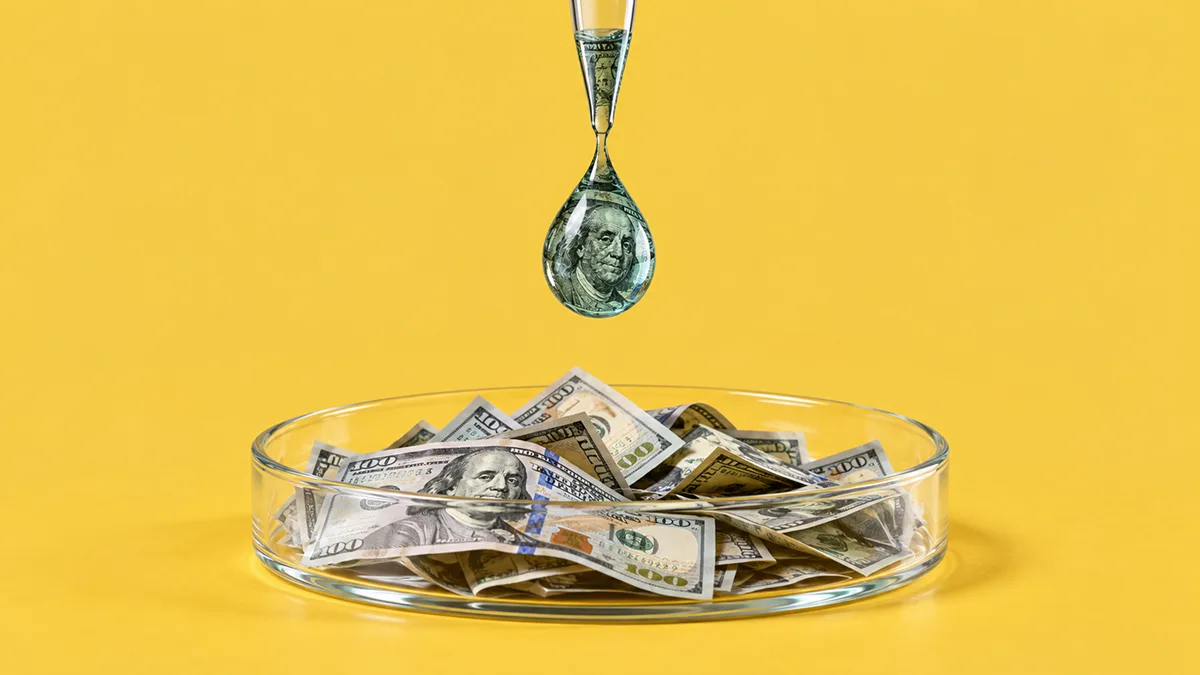
Venture capital is flooding into menopause, just not into the provider training and clinical access that could make a real difference for patient and their care providers.
When Melinda French Gates announced a $215 million commitment to women's health in June, one detail stood out: the $10 million set aside for the Menopause Society, earmarked for training doctors and nurses and reaching women in places where menopause care barely exists. It was money aimed at fixing the parts of the system that have been broken the longest, not chasing a new drug or a consumer product.
That choice reflects the reality about the greatest gaps in menopause care. While funding is flowing from all directions now, from philanthropists, VCs, employers, and policymakers, it doesn't seem to be solving the most widespread problem: a lack of patient and physician education.
Randi Plevy, co-founder of Angel Hive, an investment community focused on female founders, says most menopause startups coming across her desk are wearables and hormone monitoring technology. This tracks with where VC money is going more broadly, toward scalable consumer products with clear revenue models and repeat purchase potential.
For Plevy, the issue isn't technology itself, but rather, technology that generates an abundance of data without a clinical pathway to help women act on it. "Venture is backing the companies that tell you how many hours of deep sleep you had, but with the exception of some private clinicians, most doctors don't know how to respond to that." Until more healthcare providers are trained in menopause care, she argues, many of these products risk offering insight without meaningful intervention.
Where Isn’t Getting Funded
Other founders argue that data has an important role to play, but only when it's paired with education and access to trained clinicians.
Eloise Newnham founded Future Woman to provide at-home hormone testing and connect women with specialists trained in hormone health. When she went looking for investment, she ran into a pattern that will be familiar to anyone trying to build something more clinically serious in this space. Most of the investors she met were male. Where a woman was present in early conversations, she often turned out not to be the decision-maker. And almost every conversation circled back to the same suggestion: get to supplements as fast as possible.
Newnham self-funded. "I personally don't feel women are struggling with their hormones due to a lack of available supplements," she said. In her view, the real problem is that women lack education about their own hormones and can't find practitioners who are trained specifically in menopause and know how to listen. "That's why the areas Melinda is backing stay underfunded," she said.
Dr. Sophia Yen , who runs Pandia Health and competes directly in the space, sees the same dynamic playing out for founders. Midi Health has raised more than any other menopause telehealth platform and attracted the most press, and investors tend to read that as a signal to move on. "VCs think that the menopause service area is 'done' and that there can only be one winner," she said. "It is not in the public's best interest to only have one winner, and one size doesn't fit all." Some patients want physicians only. Some want in-person care, others asynchronous. That diversity of need doesn't fit the VC model of a single scalable winner, so it goes largely unaddressed.
Plevy is blunt about why provider training and patient education stay underfunded: "None of those objectives are sexy enough for private capital."
The Gap in Care
The result shows up in prescription rates. Globally, only around 5% of menopausal women are prescribed hormone treatments, despite the fact that most would benefit from them. In the US, that number is 4%.
Dr. Louise Newson, a UK-based GP and founder of the Balance app, which has logged over 131 million symptom records from women across 230 countries, traces the problem to its origin. She sees that data not as a substitute for clinical expertise, but as evidence of what women are experiencing and how poorly healthcare systems have been equipped to respond.
"For decades, education in medical schools and other training faculties about menopause and wider hormone health has been vanishingly small — when I look back to my own training, it was less than one hour." Newson's experience reflects training in the UK, but the lack of menopause education is not limited to one healthcare system. US physicians have also reported gaps in menopause training, leaving many providers without the confidence or knowledge to treat patients effectively.
The consequences are direct: women being misdiagnosed, prescribed antidepressants or painkillers instead of hormones, forced to seek second and third opinions before getting treatment they need.
Even basic assumptions about the condition turn out to be wrong. Of those 131 million symptom logs, the most commonly recorded is brain fog, followed by anxiety and low mood. Hot flashes rank tenth. The cultural shorthand for menopause doesn't match what women are actually living with.
Dr. Yen points to fear as the other half of the equation, the widespread anxiety among patients and providers about hormone therapy risks that has persisted long after the studies that generated it were discredited. "We need more trustworthy providers that aren't trying to upsell or provide care that is not evidence-based."
The population that has paid the highest price is women now in their late 50s and 60s. "The biggest gap by far is in women over 60 who were robbed of the chance to go on HRT because the science, since proven to be incorrect, told them it was too dangerous," Plevy said. The bone loss, the cardiovascular risk, the decline in joint health, none of it can be undone. If the current funding pattern holds, this is the group most likely to be left behind again.