



Cure
Overview
As neuroscience matures, a new group of companies is pushing translation in CNS drug development, neurotechnology, diagnostics, and AI. We've rounded up eight startups that are doing just that in 2026.
Neuroscience is finally having a moment, driven by data-backed progress that’s reshaping how investors, clinicians, and technologists think about the brain. After years of false starts and overpromises, the field is beginning to show signs of real translation, with scientific advances starting to hold up in the clinic.
Alzheimer’s is a clear example. After decades of disappointment, the rollout of anti-amyloid antibodies has introduced cautious optimism and the first glimpse of disease-modifying treatment in practice. At the same time, safety concerns, logistics, and cost remain front and center. Rather than walking away, companies are now building on these early results, refining targets, delivery, and patient selection.
Artificial intelligence has quietly become an engine behind much of this progress. Machine learning is being used to identify targets, design molecules, and improve how trial participants are selected. Over the next few years, these tools are expected to play a growing role in neuroscience drug development and in more adaptive, data-driven trial designs aimed at reducing timelines and failure rates.
Meanwhile, neurotech continues to push boundaries. Brain-computer interfaces are moving from experimental setups into regulated clinical programs, with the focus shifting away from sci-fi demos and toward practical applications like restoring movement, speech, or vision.
Investors are also gravitating toward platforms that combine biology with computation, or that de-risk development through biomarkers and precision targeting. As these approaches advance, regulators and ethicists are paying closer attention to issues like brain data privacy, cognitive consent, and transparency in AI-driven decision-making.
Against this backdrop, Retsina Meyer, head of corporate strategy at Boston-based clinical-stage neuroscience company Delix Therapeutics, believes the field has entered an “era of execution.”
As evidence of just how pivotal 2025 was for neuroscience, Meyer points to Johnson & Johnson’s January acquisition of Intra-Cellular, a New York City-based biotech focused on central nervous system disorders, for $14.6 billion. Later in the year, LB Pharmaceuticals raised $285 million in an initial public offering. The New York-based company has a schizophrenia treatment headed for late-stage testing.
To Meyer, what’s particularly encouraging is the diversity of approaches now moving forward, from biologics and small molecules to devices and neural imaging.
“Neuroscience is really the convergence of all of these different levels of systems biology. It’s quite complex, but now we’re reaching a time where the data we’ve generated is allowing us to uncover the biology,” Meyer said. “Once you understand the underlying pathophysiology, that’s when you can start treating conditions rather than just managing symptoms.”
Looking ahead, Meyer is especially excited about the potential for precision therapeutics, as well as growing insights into neuroplasticity.
“We always knew it existed, but for a long time it was thought to be limited to early development,” she said. “What we know now is that neuroplasticity happens at all stages of life. If you can augment and target it, across indications and disease mechanisms, it could become a critical component of future CNS therapies.”
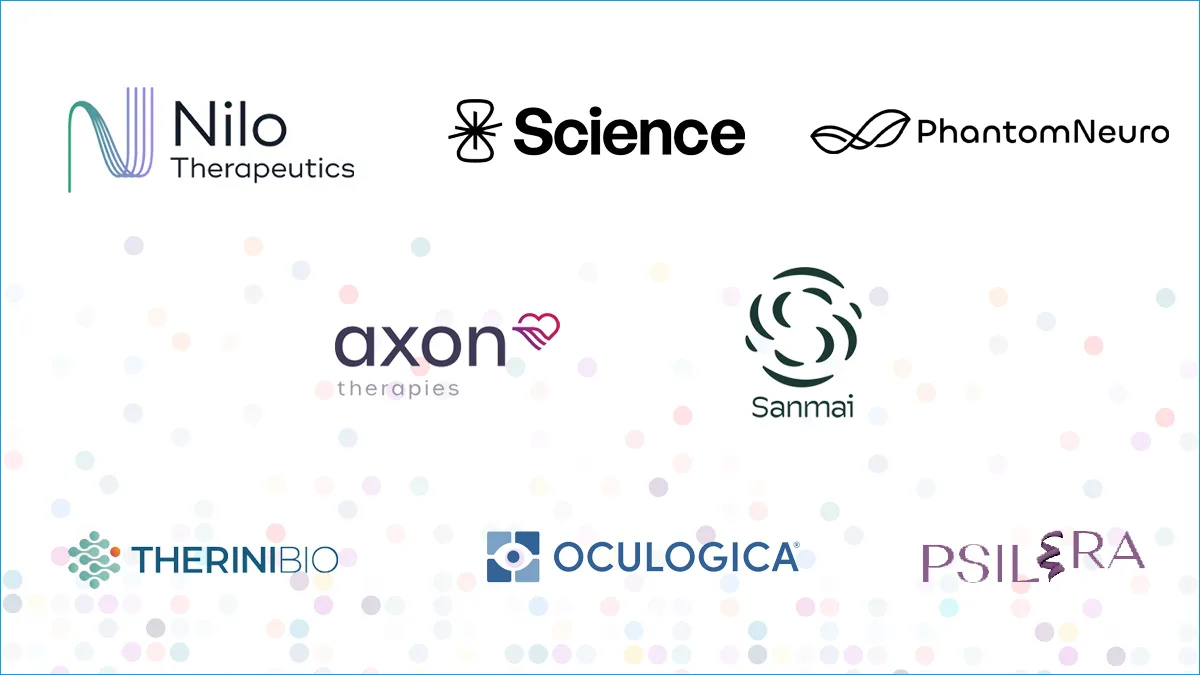
Neuroscience heading into 2026 feels less like a speculative bet and more like a field focused on execution, translation, and measurable impact. The next 18 months will show whether this progress can translate into durable benefits for patients and sustainable commercial outcomes. The following companies offer a snapshot of how that shift is taking shape, spanning drugs, devices, and data-driven platforms now moving toward the clinic.
Nilo Therapeutics
Sector: Neuro-immunology and inflammation therapeutics
HQ: New York, New York
Year Founded: 2024
Origin Story: Nilo was founded by scientists Charles Zuker, PhD (Columbia University), Ruslan Medzhitov, PhD (Yale University), and Steve Liberles, PhD (Harvard University), and was created in collaboration with venture firm The Column Group (TCG).
Key Leaders: Kim Seth, PhD, CEO and Board Director
Number of Employees: ~30
Stage: Raised $101 million Series A in October 2025 as it publicly launched
Financial Snapshot: Total disclosed funding is $101M (some databases list ~$110M including seed capital)
Notable Investors: Gates Frontier, Lux Capital, DCVS Bio, Alexandria Venture Investments, The Column Group (TCG)
Key Products: Preclinical-stage programs focused on modulating neural circuits that regulate immune responses across inflammatory and autoimmune diseases.
Recent Highlights: Nilo Therapeutics aims to harness neural circuits, specifically brain-body circuits, to restore immune homeostasis in disease. Instead of conventional immunosuppression (which often targets immune cells directly), it is targeting the neural regulation of immunity: for example, “master regulator” circuits (including vagal neurons) that influence systemic immune activation and inflammation. The goal is to modulate multiple immune pathways in concert, reduce therapeutic resistance, and address a broad spectrum of autoimmune and inflammatory diseases with unmet needs. In the broader biotech/medtech space, this sits at the intersection of neuroscience, immunology, and therapeutic innovation.
Science Corporation

Sector: Clinical-stage neurotechnology and medical devices
HQ: Alameda, CA
Year Founded: 2021
Origin Story: Founded by Max Hodak, a co-founder of Neuralink, and Alan Mardinly, formerly part of the leadership team at Neuralink.
Key Leaders: Max Hodak, CEO and Co-Founder, Alan Mardinly, PhD, Co-Founder and Chief Scientific Officer
Number of Employees: 11-50
Stage: Raised $104 million in the form of a convertible note in a financing led by Khosla Ventures in April of 2025
Financial Snapshot: In total, the company has raised a known $177.3 million in funding
Notable Investors: Khosla Ventures, Artis Ventures, Unbound Ventures
Key Products: Clinical-stage medical technology with the goal of creating devices aimed at restoring vision, cognition, and mobility to patients who have lost it.
Recent Highlights: Science Corp doesn’t just develop a device; it owns and operates its own manufacturing infrastructure via its “Science Foundry” division. It acquired MEMS facility assets in the Research Triangle Park (RTP), NC region, giving it in-house chip/MEMS manufacturing for neural interface devices. Many competitors outsource manufacturing, which can slow down iteration or increase cost/risk.
Phantom Neuro
Sector: Non-invasive neuromodulation technology for brain disorders
HQ: Austin, TX
Year Founded: 2020
Origin Story: Spun out of Johns Hopkins University School of Medicine by founder Connor Glass, PhD, to improve quality of life by bridging the gap between people and machines.
Key Leaders: Connor Glass, PhD, CEO and Founder
Number of Employees: <15
Stage: Raised a $19 million Series A funding round in April 2025 led by Ottobock, a prosthetics/orthotics company.
Financial Snapshot: Total capital raised is $28.5 million
Notable Investors: Breakout Ventures, Draper Associates, LionBird, Gaingels, Capital Factory, and Time BioVentures.
Key Products: In April 2025, the company announced that Phantom X—its core platform—received both Breakthrough Device Designation and TAP Acceptance from the Food and Drug Administration (FDA).
Recent Highlights: Phantom Neuro has developed its flagship platform, the “Phantom X,” described as a minimally-invasive muscle-machine interface (an implantable sensor device) for amputees and mobility-impaired individuals. It’s in the device development/clinical trial preparation phase.
Sanmai Technologies
Sector: Non-invasive ultrasound neurotherapeutics for brain and mental health
HQ: Los Altos, CA
Year Founded: 2020
Origin Story: Created as a public benefit corporation by experts in neuromodulation and ultrasound, clinical science and engineering.
Key Leaders: Jay Sanguinetti, PhD, CEO, President, and Co-Founder; Chris Daft, PhD, Founder; Taylor Kuhn, PhD, Founder and Chief Clinical Officer
Number of Employees: <10
Stage: Raised a $12 million Series A in June 2025.
Financial Snapshot: Since being founded, the company has raised $25.1 million.
Notable Investors: The Pay It Forward Company, Future Ventures, One Mind, PsyMed Ventures
Key Products: The company is developing a medical device called Lotus, which uses low-intensity focused ultrasound neuromodulation to treat anxiety disorders. Samnai has a partnership with Acacia Clinics to test their device in a randomized, placebo-controlled trial.
Recent Highlights: Many neuromodulation/psychiatric device companies rely on technologies like transcranial magnetic stimulation (TMS), deep brain stimulation (DBS), or implantable devices. Sanmai is using tFUS, which can target deeper brain structures non-invasively and with high spatial precision. tFUS is still relatively nascent as a therapeutic tool for neuropsychiatry. Sanmai’s positioning suggests it is among the first to attempt to commercialize this for mental-health indications.
Therini Bio (Previously MedaRed)
Sector: Targeted biologic therapeutics for neurodegenerative disease
HQ: San Francisco, CA
Year Founded: 2016
Origin Story: Therini Bio was founded upon the pioneering work of Katerina Akassoglou, PhD, Senior Investigator at Gladstone Institutes and Professor of Neurology at the University of California, San Francisco. Dr. Akassoglou and colleagues discovered that fibrin, a blood-clotting factor, is implicated in the toxic inflammation that activates the brain's immune response and damages neurons in neurological diseases including Alzheimer's disease (AD) and multiple sclerosis (MS) as well as in a variety of peripheral indications where destructive inflammation plays a role in the disease process.
Key Leaders: Tara Nickerson, PhD, President and CEO; Joel Naor, MD, Chief Medical Officer of Ophthalmology; Nuno Mendonça, MD, Chief Medical Officer of Neurology
Number of Employees: <10
Stage: Raised a total of $75 million in May 2025 through series A funding.
Financial Snapshot: The company has raised a total of $101 million through six funding rounds since July 2025.
Notable Investors: Alzheimer’s Drug Discovery Foundation, Angelini Investors, Apollo Health Ventures, Eli Lilly, SV Health Investors, Apollo Health Ventures, Dementia Discovery Fund, Sanofi Ventures, Dolby Family Ventures, MRL Ventures Fund, Foundation for a Better World, Dreavent Biotech Investors
Key Products: Clinical‑stage immunotherapies targeting pathogenic fibrin‑driven inflammation, including THN391, a monospecific antibody targeting the inflammatory epitope of fibrin in Alzheimer’s and diabetic macular edema.
Recent Highlights: In July 2025, the company announced that the first patient was dosed in a Phase 1b trial evaluating THN391 for the treatment of Alzheimer’s disease (AD).
Oculogica
Sector: Digital diagnostics using eye-tracking to assess brain health
HQ: New Richmond, WI
Year Founded: 2013
Origin Story: Founded by Dr. Uzma Samadani, a neurosurgeon at Centracare and the Minneapolis VA Medical Center, Oculogica uses eye movements to evaluate potential concussion caused by injuries to the head or body, especially in contact sports such as football and boxing.
Key Leaders: Rosina Samadani, PhD, CEO and Board of Advisors; Uzma Samadani, MD, Founder and Scientific Advisor; Joel Sanderson, Chief Technology Officer
Number of Employees: <15
Stage: Raised $11.6 million through later stage VC (series B) funding in May 2024.
Financial Snapshot: Oculogica has raised $23.3 million in total funding since inception.
Notable Investors: GHS Investment Management (Canada) Company, Titletown Tech, US Army Medical Research and Development Command, Colle Capital Partners, FIN Capital Angels
Key Products: Its device, the EyeBOX, has received FDA clearance, which the company said has the most FDA clearances for concussion.
Recent Highlights: In 2025, the company announced that a new publication highlighted the role of EyeBOX concussion test in getting patients appropriate therapy more quickly. Oculogica also announced a partnership in 2025 with XcelABLE for concussion diagnostics in medical evaluations.
Psilera
Sector: Next-generation psychedelic-inspired therapeutics for neurological disease
HQ: Tampa, FL
Year Founded: 2019
Origin Story: Dr. von Salm's father died from Frontotemporal Dementia (FTD), a rare form of dementia that the company is now targeting with its lead compound PSIL-006, adding a personal impetus to their research.
Key Leaders: Chris Witowski, PhD, Co-Founder and CEO; Jackie von Salm, PhD, Co-Founder and Chief Scientific Officer
Number of Employees: ~10
Stage: Psilera is a seed-stage company. In October 2025, the company was awarded a 3-year, milestone-driven grant from the National Institutes of Health (NIH) worth up to $2 million.
Financial Snapshot: Raised a total of $4.74 million, including the NIH grant
Notable Investors: National Institutes of Health, Florida High Tech Corridor, Bonaventure Equity, Frühstarter Ventures, Mystic Ventures, SeedFund Capital
Key Products: The company has a pipeline of next-generation neuro-plastogens, including PSIL-006, a therapeutic for the treatment of frontotemporal dementia (FTD).
Recent Highlights: In 2025, Psilera announced a collaboration with drug development company, Hesperos, to advance preclinical modeling of their drug, PSIL-006 for frontotemporal dementia. The company also hosted the first annual Frontotemporal Dementia (FTD) Research Summit in January 2025.
Aizen Therapeutics
Sector: AI-enabled oral peptide therapeutics for CNS disorders
HQ: San Diego, CA
Year Founded: 2022
Origin Story: Aizen is a spinout of Caltech University. Caltech professor David Van Valen, MD, developed the proprietary, AI protein design platform by which the mirror peptides (a novel class of biologic medicines) are being created.
Key Leaders: Ajay Kshatriya, MBA, CEO and Co-founder; Bernhard Geierstanger, PhD, Chief Scientific Officer; Todd Peterson, PhD, SAB Chairman and Co-founder
Number of Employees: <10
Stage: Aizen is a seed stage company that raised a $13 million round of funding, led by Madrona in November 2024.
Financial Snapshot: The company has raised a total of $13 million in capital since inception
Notable Investors: Madrona, Cercano Management, Wilson Hill Ventures
Key Products: Aizen is developing a diverse portfolio of therapeutics for people with chronic immune disorders.
Recent Highlights: In April 2025, Aizen announced that their mirror peptides generate complete "Bizarro Cells.” The researchers indicate that these cells are the molecular equivalent of “Superman's mirror universe.”