
Cure
Overview
A Q&A with Peter Farmakis, CEO of 32 Biosciences, on building a company around the biology most microbiome startups missed, and what it takes to move from academic science to a fundable, clinical-stage therapeutic.
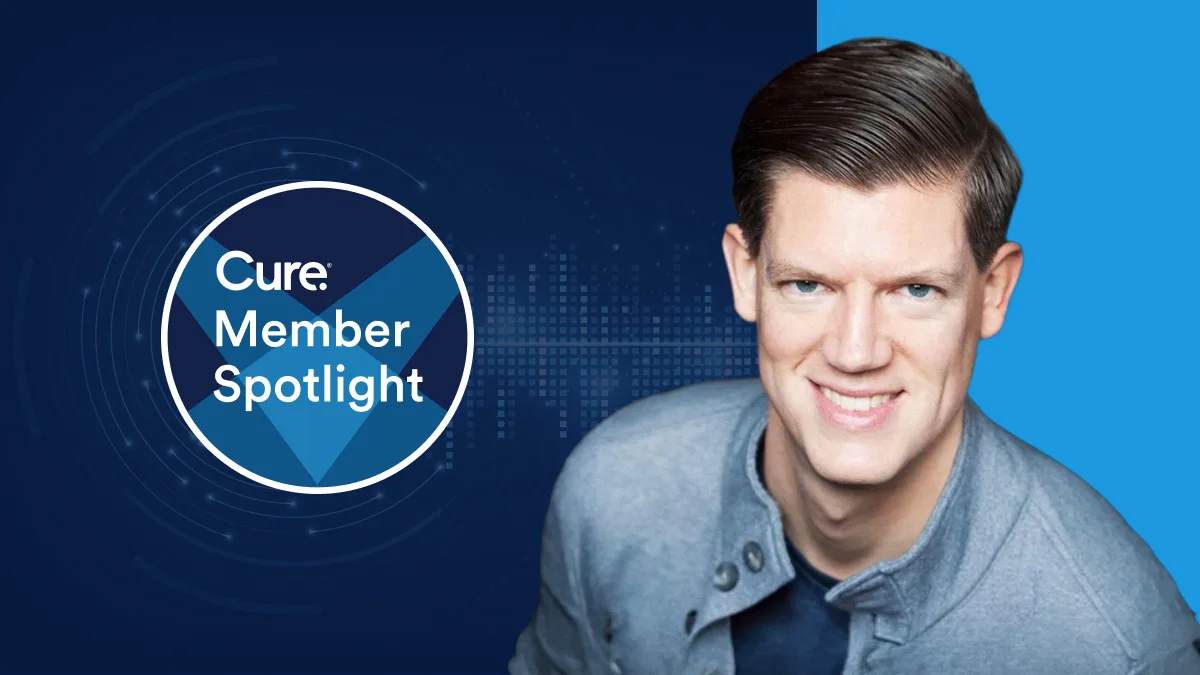
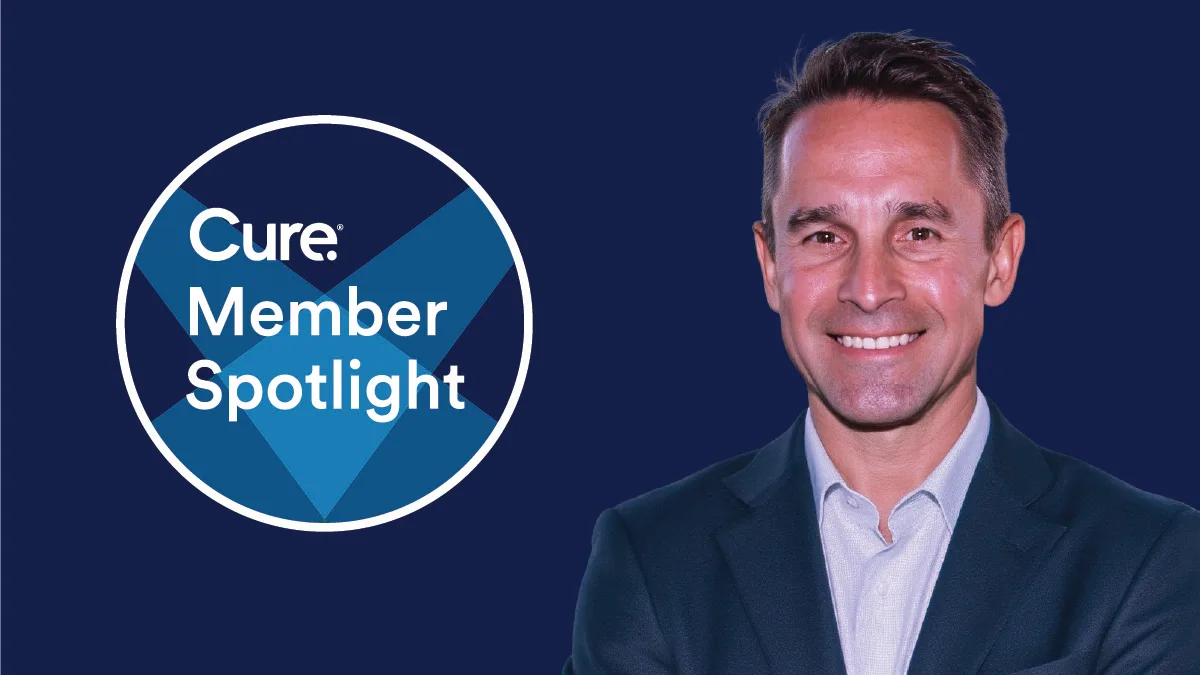
Welcome to our Member Spotlight series, where we highlight the groundbreaking work of the companies and individuals in Cure’s community.
Meet Peter Farmakis, MBA, CEO of 32 Biosciences, a Chicago-based company developing therapeutics that target dysfunction at the gut mucosal-immune interface, the biological boundary where many serious conditions, from surgical site infections to chronic GI disease, originate. Its lead asset, CS-0003, is advancing toward Phase I clinical development, with a discovery platform designed to quantify mucosal function and guide future pipeline expansion. The company launched its $40 million Series A financing during the 2026 J.P. Morgan Healthcare Conference in January.
Farmakis spoke to Cure about why most microbiome companies got the problem wrong, how he narrowed decades of academic research into a fundable strategy, and what clinical proof he's trying to generate in the next 18 months.
What is 32 Biosciences building, and what's the core problem behind it?
We are focused on a fundamental but under-addressed driver of disease: dysfunction of the gastrointestinal mucosal barrier and its interaction with the immune system. This is where the body meets the external environment, and when it breaks down, it drives a wide range of serious conditions, from surgical site infections to chronic GI disease and cancer recurrence.
Most therapies today are designed to manage downstream consequences, such as infection or inflammation, rather than addressing the underlying biology. Our approach is different. We are developing therapeutics designed to restore and protect the gut mucosal-immune system—stabilizing the barrier, suppressing harmful bacterial behavior, and modulating immune responses.
Our goal is to intervene earlier in the disease process, at the point where pathology begins, and in doing so, improve outcomes across GI indications with significant unmet need.
At the beginning, what felt most uncertain, the science, the market, or how to build around it?
The science itself was not the primary uncertainty. It is grounded in decades of work from leading clinicians and researchers who helped define the role of mucosal barrier dysfunction and host–microbe interactions in disease.
The greater uncertainty was how to translate that science into something executable, a therapeutic approach that fits within clinical practice, regulatory pathways, and a fundable company model. Bridging that gap from academic insight to product strategy is where many efforts struggle.
For us, the challenge was building around the science in a disciplined way: defining a clear lead asset, identifying the right initial indication, and creating a development plan that could generate meaningful clinical data. It was less about proving the biology and more about operationalizing it.
How did you land on surgical site infections as your first indication? Was that a scientific call, a regulatory one, or a go-to-market decision?
It was a combination of all three, but it starts with the biology. Surgical site infections in GI procedures are directly linked to disruption of the mucosal barrier and changes in bacterial behavior—exactly the mechanisms we are targeting.
From a development perspective, SSIs provide a well-defined and measurable endpoint, which is important for a first-in-class therapeutic. It allows us to generate clear clinical data in a controlled setting.
There is also a strong practical element. These infections represent a significant unmet need, with substantial clinical and economic impact, and current prevention strategies are limited. Starting in this setting allows us to demonstrate value in a focused way while establishing a broader platform that can expand into additional indications over time.
A lot of microbiome companies struggled to turn interesting biology into real products. Where did they go wrong, in your view?
A common challenge was focusing on descriptive biology—cataloging microbial composition or trying to shift it—without anchoring in mechanisms that are directly causal and clinically actionable. Our perspective is that disease is driven by function at the mucosal interface: barrier integrity, immune signaling, and bacterial behavior. If you’re not targeting those mechanisms, it becomes difficult to develop consistent, scalable therapeutics.
Another issue has been translation. Complex biology needs to be simplified into defined interventions that can be developed, regulated, and deployed like a drug. That’s why we’ve focused on a therapeutic modality—our mucosal-immune modulator—paired with a discovery platform designed to quantify function and guide development.
The gap was a lack of focus on mechanisms that can reliably translate into clinical outcomes.
What was the hardest step in moving from academic work into a company someone would actually fund?
The hardest step was prioritization, taking a broad and complex body of scientific work and distilling it into a clear, investable strategy. Academic research allows for exploration across many directions; building a company requires focus on a defined path to value creation. That meant identifying a lead asset, selecting a first indication, and aligning around a development plan that could generate near-term clinical proof. It also required building the right infrastructure—regulatory strategy, manufacturing, clinical execution—to support that path.
Ultimately, investors are looking for more than compelling science. They want to see a credible plan to translate that science into a product that can move through development and into the market. Getting to that level of clarity was a critical step.
6. Right now, what are you trying to prove, not in theory, but in the next 12 to 18 months?
Our focus over the next 12 to 18 months is on clinical readiness and initial human validation. Specifically, we are advancing our lead asset, CS-0003, through IND-enabling activities and into Phase I clinical development in GI surgical site infections. The key objective is to demonstrate that modulating the gut mucosal-immune system can translate into meaningful clinical outcomes. That includes validating safety, establishing early signals of efficacy, and reinforcing the underlying mechanism in a human setting.
In parallel, we are continuing to advance our GI discovery platform, which is designed to quantify mucosal function and support future pipeline development. Together, these efforts are about moving from strong preclinical and translational data to clinical proof.
As you join the Cure community, what kinds of connections or resources would most accelerate your mission at this stage?
At this stage, progress is driven by alignment across capital, clinical execution, and strategic partnerships.
On the capital side, we are advancing our Series A financing to support clinical development and platform expansion. Access to investors who understand platform biology and first-in-class therapeutics is important.
Clinically, partnerships with leading surgical centers and investigators will be key to executing high-quality trials and generating meaningful data.
We also see value in strategic collaborations—whether with pharmaceutical companies, research institutions, or healthcare systems—that can help expand the reach of both our therapeutic pipeline and our discovery platform.
The Cure community brings together many of these elements, and we see it as an opportunity to accelerate both our clinical progress and broader platform strategy.