


Cure, Google Gemini
Overview
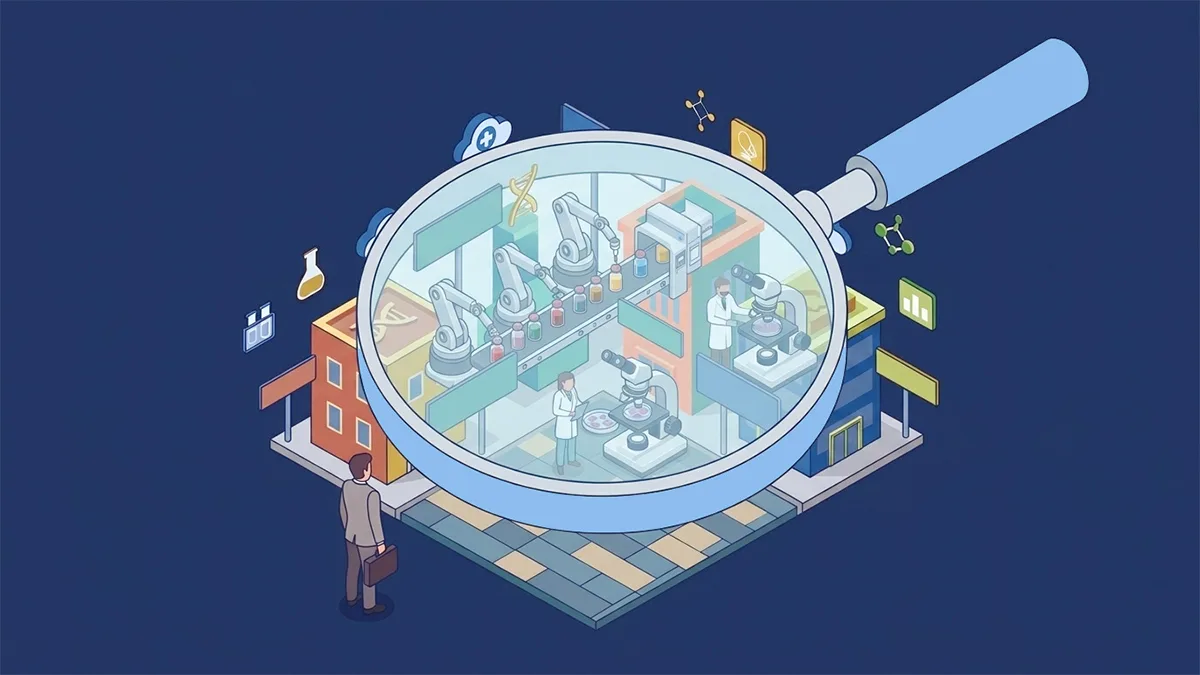
Moving a discovery from the lab to large-scale manufacturing requires far more than a handoff. Experts explain how technology transfer works in biotech and pharma, the different types of transfers, and why poor execution can delay commercialization.
Successful technology transfers allow scientific discoveries to move seamlessly from the research lab to large-scale commercial manufacturing. While it may sound like a simple process, it is anything but. Not only must teams pay close attention to how processes and documentation are handed over, they also must ensure that drugs, therapeutics, or other products are produced safely and consistently.
Tech transfers are not a one-and-done deal, said Ben Hwang, PhD, Chairman and CEO of Profusa, a biotech company developing biosensors to monitor body chemistry. Instead, these transfers occur at multiple stages in a product’s lifecycle, such as between research and development (R&D) and manufacturing departments, or externally when partnering with contract development and manufacturing organizations (CDMOs). Each transfer must maintain product integrity and meet regulatory guidelines.
Effective technology transfer also plays a strategic business role, he said. It enables biotech and pharmaceutical companies to scale production following clinical approval, enter new geographic markets, and respond rapidly to changes in demand.
In highly competitive markets, the ability to execute a seamless and well-planned transfer can significantly shorten time to market and strengthen supply chain resilience. Conversely, poorly managed transfers can lead to delays, compliance issues, and costly production setbacks.
As the market grows more complex, with everything from biologics and cell therapies to small molecules, the demand for precise technology transfer processes is increasing. Success requires effective collaboration across many levels of an organization. In this overview, you’ll discover what a tech transfer is, the characteristics of a successful transfer, and the challenges companies may face throughout the process.
What Does Technology Transfer Mean in Pharma and Biotech?
In biotech and pharma, the primary goal of a technology transfer is to ensure that a process developed at one stage can be reliably reproduced at another stage without compromising quality, patient safety, or regulatory compliance.
In other words, if a drug candidate is formulated in a lab and tested during clinical trials, its processes must be transferred effectively to manufacturing environments capable of producing larger volumes while maintaining regulatory compliance.
Technology transfers typically occur as products move from late-stage clinical trials toward regulatory submission and commercialization, said Sanjeev Luther, MBA, Chief Executive Officer of Ernexa Therapeutics, a biotech company focused on treating advanced cancer and autoimmune diseases.
When done correctly, technology transfer allows for a seamless evolution from laboratory innovation to a consistent, market-ready product.
“It’s not a one-time handoff, but a continuous thread that bridges discovery to commercial production,” added Hwang. “At Profusa, we view tech transfer as the connective tissue between innovation and execution. We’ve lived this transition by translating advanced implantable biosensor technology into regulated, scalable production for clinical and commercial use.”
Types of Tech Transfers
Technology transfers in biotech and pharma can take several different forms. These transfers may occur internally between research and manufacturing teams, or externally to CDMOs or between global production sites. Recognizing these different types of tech transfers can help keep products moving while ensuring quality and compliance.
“Technology transfer isn’t a single path,” said Hwang. “It’s a series of distinct transitions, each with its own risk profile.”
According to Hwang, the tech transfer journey often begins with academic-to-industry transfers. The goal of these transfers is to turn early “blue-sky” discovery into a robust, regulated prototype.
“The most friction, however, usually occurs during the move from R&D to manufacturing, as flexible lab methods must be hardened for reproducibility, strict quality control, and compliance.”
Internal transfers between sites or departments can also be deceptively complex, requiring organizations to manage both operational and cultural transitions. External transfers to CDMOs or other partners demand rigorous intellectual property protection and alignment of quality systems.
“Having moved advanced sensor science from academic roots through internal R&D and eventually to external manufacturing partners, we've found that success depends on a distinct organizational cultural shift from a lab-to-business mindset,” said Hwang. “Build and scale your rigor and internal control and regulatory processes to match the maturity of each stage.”
Overall, here’s what experts say companies need to understand about each type of tech transfer.
Academic-to-industry transfer: This transfer involves moving intellectual property, research data, and proof-of-concept findings. The challenge lies in translating these research processes into standardized, scalable, and regulatory-compliant manufacturing systems suitable for clinical and commercial use.
R&D-to-manufacturing transfer: Successful transfers require detailed process documentation, including validation planning, equipment alignment, and process guidelines. The goal is to ensure that processes developed in the lab can be reproduced at a larger scale without compromising quality or performance.
Internal transfer: These transfers occur between departments or sites within the same organization. Strong communication, standardized documentation, and robust training are essential for success.
External transfer: These transfers occur between separate organizations and require formal agreements, defined roles and responsibilities, secure data sharing, and clear governance. External transfers often demand more rigorous oversight and risk management to ensure compliance and protect intellectual property.
The Ins and Outs of the Tech Transfer Process
Depending on the stage of development when the tech transfer occurs, the process can range from relatively straightforward to highly complex, said Brett Pletcher, JD, an attorney and advisor specializing in life sciences with Gunderson Dettmer.
“If a discovery platform is licensed out, that process is pretty easy. The licensor hands over the assays or other discovery technologies, explains how to make and use them, and the parties go on their merry way. The further along the drug gets, the more complicated the tech transfer becomes.”
One of the biggest challenges in drug development is producing enough compound for testing, Pletcher explained.
“Sometimes it can initially cost hundreds of thousands of dollars to make just a few grams of the compound. As teams improve the synthesis process, they can reduce those costs dramatically. They keep working on the chemistry until the cost of goods sold reaches a point where the drug becomes viable.”
Some orphan drugs can support very high prices, allowing manufacturing costs to remain relatively high.
“But for drugs aimed at larger populations, the chemistry has to reach a point where manufacturing costs are low enough to make the drug commercially viable,” he said. “Transferring that manufacturing know-how to the licensee and the licensee’s manufacturing teams can be very difficult, expensive, time consuming, and risky.”
Depending on the stage of development, companies may need to transfer ongoing preclinical and clinical studies, clinical results databases, safety databases, regulatory permissions, supply chain relationships, and more.
“In short, whatever infrastructure has been built around a potential drug at the time it is licensed needs to be transferred to the licensee,” Pletcher said. “The more developed the drug, the more that has to be transferred and the more complex the transfer becomes.”
Often, a project manager works with each department within the licensee company to determine what must be transferred once an agreement is signed.
“The project management team then works with each of those departments and the licensor over time to ensure the tech transfer process is progressing, intervening with senior management or the licensor when the process bogs down or fails.”
Ultimately, the goal of a tech transfer is to clearly define accountability, communication pathways, and decision-making authority so the transferred process maintains product quality, regulatory compliance, and operational efficiency.
How Tech Transfer Decisions Affect Speed, Cost, and Regulatory Readiness
Tech transfer is often where valuable time can be lost in drug development, said Pletcher.
“A poor project manager or a breakdown in communication between the licensor’s scientists and the licensee’s can set a program back years.”
Quality is also a moving target, he said, and regulatory readiness requires that every step of the transfer is documented and validated.
“If the paper trail of how a molecule is made is broken during the transfer, the Food and Drug Administration (FDA) may refuse to approve the site for production. Without those records, regulatory inspections are likely to fail.”
Biotech and pharma companies can also be slowed by resource-constrained data, unoptimized manufacturing processes, and simple human factors.
Startups often conduct studies with enough rigor to prove a concept but not enough to support regulatory filings.
“Acquirers often have to perform ‘diving catches’ to fix poorly designed studies or data integrity gaps.”
Meanwhile, a lab process rarely translates directly into a commercial process.
“If a startup hasn't optimized yields due to budget constraints, the larger partner may find themselves two years behind the competition while they rebuild the manufacturing process from scratch to make a commercial launch viable.”
Finally, when companies license out a compound, internal engagement can decline.
“The B-team might be assigned to handle the data transfer, or key scientists might leave the company, taking critical tribal knowledge with them.”
All of these factors can directly impact a product’s development timeline, overall cost structure, and regulatory preparedness. Insufficient planning or unclear communication can lead to compliance issues, supply disruptions, and extended time to market.
Why Tech Transfer Has Become More Complex in Recent Years
Technology transfer has become significantly more complex due to the evolving nature of pharmaceutical innovation and increasingly stringent regulatory expectations.
The rise of advanced therapies such as biologics, cell and gene therapies, and highly potent compounds has introduced greater process sensitivity, specialized equipment needs, and tighter control strategies.
As a result, today’s technology transfer demands deeper technical expertise and more robust risk management than ever before, said Luther.
“Advanced modalities like cell therapies involve living systems, complex analytics, and highly sensitive processes, which inherently increase variability and risk,” he said. “When you add global manufacturing into the mix, such as multiple sites, partners, and regulatory jurisdictions, the complexity multiplies.”
Founders can manage this complexity by designing processes with the end in mind. That includes standardizing processes where possible, investing early in robust analytics, and choosing partners with deep modality-specific expertise.
“Just as importantly, teams should view tech transfer as a strategic capability, not an operational afterthought,” Luther said.
Common Challenges and Failure Points That Increase Risk
Even carefully planned technology transfers can encounter challenges that increase organizational risk. When not properly managed, these issues can lead to validation failures, supply delays, and costly remediation efforts.
Sometimes the problem arises when teams underestimate the complexity of tech transfers, especially for advanced modalities such as cell therapies, Luther said. Even small changes in materials or processes can have outsized effects on product quality.
“Another common challenge is treating tech transfer as a one-time handoff instead of an ongoing collaboration,” he said. “When knowledge isn’t fully captured or assumptions aren’t documented, problems often surface later during scale-up, validation, or regulatory review.”
Lack of early regulatory alignment can also create downstream delays.
“If a process isn’t designed with regulatory expectations in mind, teams may be forced to make late-stage changes that cost time and resources,” Luther said.
Other potential challenges include:
Incomplete or inaccurate process documentation
Differences in equipment or facility design once technology is transferred
Inadequate training or knowledge transfer to new team members
Poor cross-functional communication
Overlooking regulatory and compliance requirements
Errors during scale-up or scale-down processes
Successful tech transfer requires forward-looking and integrated development, Pletcher said. Each department must understand exactly what the next department needs.
When moving from research to clinical development, teams must provide robust safety and toxicity data.
“A missed experiment here can delay a program by a year,” he said.
When transitioning from clinical development to commercialization, teams must collect data that satisfies both regulators and global payers.
And when moving from manufacturing to market, quality must be localized.
“Manufacturing needs to know years in advance how much product they need, at what time and in what form,” Pletcher said. “This pressures the commercial team to forecast demand and the finance team to decide how much inventory investment they are willing to make.”