



Cure
Overview
A Q&A with the co-founder and CEO of Hi-Rx, a platform that connects pharmaceutical sponsors and clinical sites with on-demand nurses, on why clinical trial recruitment keeps breaking at the same point, and what a nurse network can do that a CRO can't.
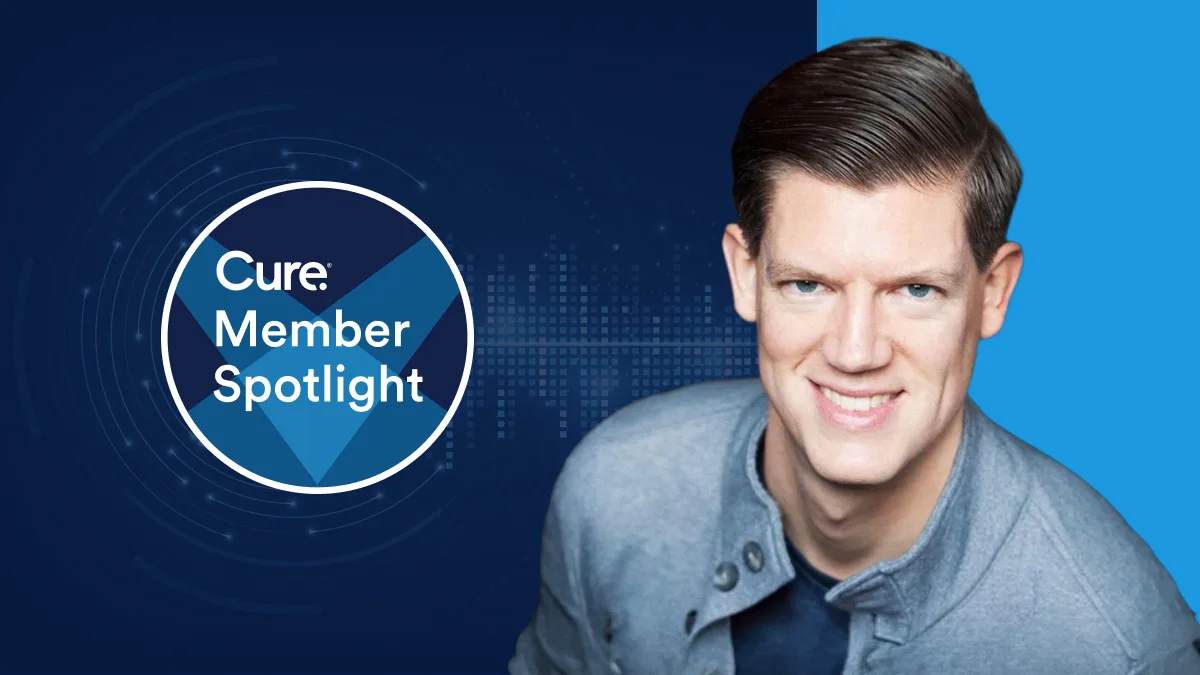
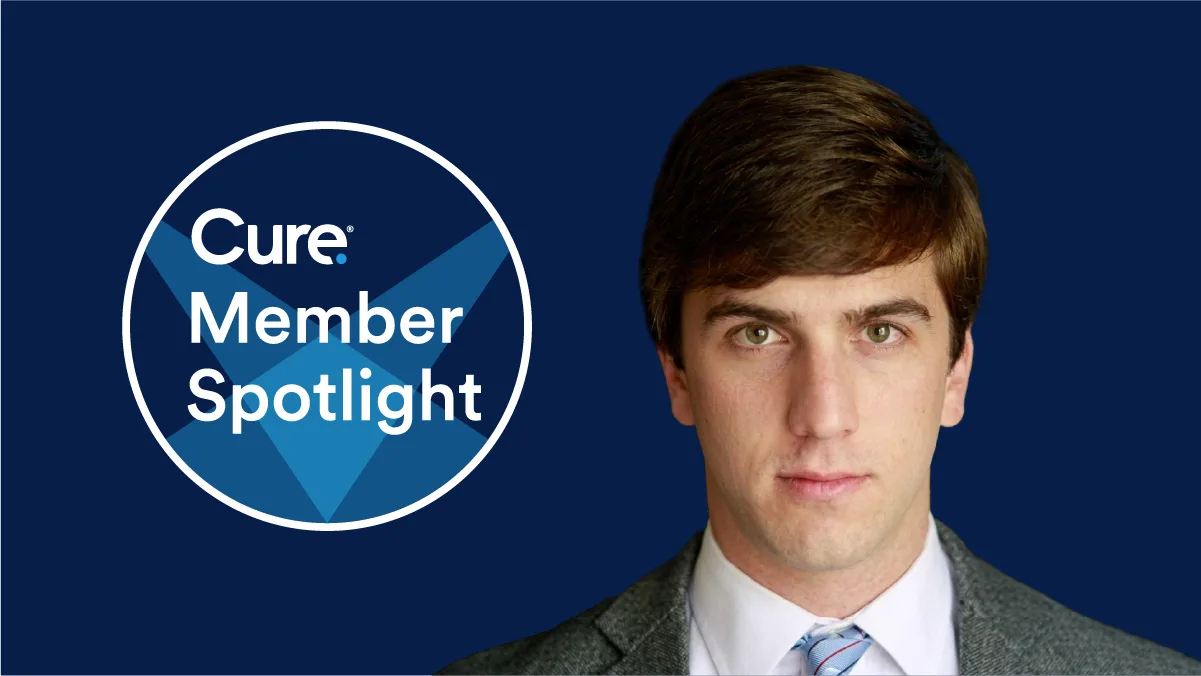
Welcome to our Member Spotlight series, where we highlight the groundbreaking work of the companies and individuals in Cure’s community.
Meet Russell Bar, co-founder and CEO of Hi-Rx, a platform that deploys nurses on demand to pre-screen and recruit candidates for clinical trials, handling the patient-facing work that pharmaceutical sponsors and clinical sites rarely have the bandwidth to do well.
Hi-Rx got its start in direct-to-patient care, pivoted to clinical trial support, and is now focused on pre-screening candidates and improving enrollment rates at a point in drug development where delays are measured in years and cost millions.
We spoke with Russell about why fragmentation keeps stalling clinical trials, what it took to find the right use case for a nurse-powered gig model, and where the company is headed as it moves from early validation into scale.
You call Hi-Rx the "last mile" of medical care delivery. What does that actually look like on the ground, and what problem were you seeing that made you want to build this?
Hi-Rx was first conceived in 2020 by Kaye Macabuag Bar, my co-founder (and wife!). Kaye is a registered nurse and senior manager at an oncology center, and at the time she was juggling a number of different side hustles in addition to her full-time work.
She realized that many nurses have similar side hustles, but many of those jobs require inflexible hours which can be hard to meet on a full-time nursing schedule.
Kaye wanted to build a better way for nurses to utilize their skills and expand their existing credentials, and we both realized that we could harness the power of a vast network of nurses to solve logistical challenges for a wide array of medical providers.
The ‘last mile’ delivery we offer really applies to any situation where a nurse can help bridge the gap between medical providers and patients. The mission for Hi-Rx is to build the most nurse-focused platform possible in order to build a dynamic labor pool; if we have the best nurses, we can attract the best clients.
You are operating a gig economy model for nurses. How do you maintain a consistent standard of care when the workforce is distributed and working on their own schedule?
Nurses are the most important part of our company. Regardless of use case, we need to have a strong network of on-demand nurses to support every Hi-Rx workflow.
Our hiring process is the first step to ensuring consistent value. We expend a lot of effort and resources to find great talent, and vet them carefully. Internally, we have it down to science—we have a model that predicts the number of nurses we will need to be active in order to support our current volume, and we always try to keep candidates on file to ‘activate’ as needed.
By limiting hiring to just the labor we need, we are able to consistently hire quality over quantity. Once hired, nurses must demonstrate mastery of specific protocols before they are allowed to perform work for that specific client. For example, in the Clinical Trials Use Case, each nurse is trained on the study-specific guidelines, questions and decision trees before they are able to process candidates from that study.
The company works across direct patient care and clinical trial support for pharma sponsors. How did you land on both, and do you see them as connected or as separate businesses?
From a business development perspective, one of my jobs is to discover use cases in which our nurses can create value. Before we landed on the Clinical Trials Use Case, we investigated over a half-dozen use cases across a variety of healthcare sectors; interviewing potential customers and gathering industry data.
Through our research, we determined that the Clinical Trials Use Case has the best mix of urgent problem vs. unique and attainable solution, which we view as an important combination for early startup development.
Namely, it became obvious that fragmentation is the root cause for most of the bottlenecks experienced in the clinical trial phase by pharmaceutical sponsors (urgent problem), and we realized that Hi-Rx’s nurses were particularly well-suited to solve this problem through their combination of empathy and healthcare expertise (unique and attainable solution).
For the most part, we no longer operate our direct patient care model, but it was a very important part of our history. While it turned out that the B2C version of Hi-Rx was not the most scalable use case, we were able to build a Minimum Viable Product to test our workflow, and generate significant revenue to serve as a nest egg for other use cases (like the pharma sponsors use case).
Optimistically, those are only two of the use cases we can imagine for Hi-Rx. We can also imagine bridging gaps for insurers, helping expand a hospital’s reach (e.g. the physical touch of telehealth) and/or maximize current resources, or even revisiting our direct patient care use case if the correct opportunity presented itself.
I’ve said it before, and I will shamelessly say it again: our strength is our network of nurses, and we are aggressively seeking to solve any problem where an on-demand labor pool of nurses can make the difference.
Clinical trial recruitment and retention is a known bottleneck in drug development. Where specifically does Hi-Rx plug into that process, and what does it change for a sponsor?
The value created is threefold: we are able to reach more candidates than the average clinical site, fewer candidates ‘fall through the cracks’, and the standard of pre-screening is consistent across every clinical site we work with.
In the Pilot of the Clinical Trials Use Case, Hi-Rx “Passed” about ~20% of the candidates we contacted, and we were able to schedule over 50% of all of the candidates who “Passed” (about 10% of the total volume).
Regardless of the client, the first step for each new trial is Discovery, where we develop trial-specific protocols, and introduce ourselves to all relevant parties. Once the discovery phase is complete, Hi-Rx can immediately begin pre-screening candidates. Hi-Rx offers candidate recruitment, but we will also pre-screen candidates who enter the funnel from other recruitment vendors.
As candidates enter the funnel, they are contacted by a Hi-Rx nurse, who can answer questions, offer comfort, and take accurate records to help assess the candidate’s eligibility. Simply, candidates are more likely to enroll when they are greeted by a friendly and knowledgeable voice at the beginning of their journey
Where is Hi-Rx right now in terms of scale, and what does the next phase of growth look like?
Hi-Rx is in step twoof the four step process known as the Customer Development model, pioneered by one of my most-admired entrepreneurs, Steve Blank.
One of the key insights of the Customer Development model is that a startup is not a smaller version of a full-scale business. Instead, a startup is an entity that is dedicated to discovery: how can the company’s value best be applied to solve problems?
Currently, we are early in the process of step two, Customer Validation, to determine if our value resonates with a wider audience. The tangible goal here is sales growth.
In this process, we must validate demand beyond our first ‘earlyvangelist’ customers, and discover a repeatable Sales Roadmap that outlines a sale from beginning to end (key players, sales materials, etc).
Once those goals are complete, the next step in our growth is to execute the model at scale in step three. Often, these goals are more cyclical than linear, and it’s possible we will have to revisit ideas in Step One and Step Two before proceeding to Step Three.
Fellow founders beware: It is extremely important to be very confident in the validity of the business model that was explored in step one and two. Once the rate of cash burn accelerates in step three, it is the point of no return.
As you join the Cure community, what kinds of partnerships or connections would move the needle for you at this stage?
Most of our current goals are tied to sales success. In this way, the connections/partnerships that would most move the needle for us are potential clients for our clinical trials use case:
Are there founders in your network working on an experimental product that could use clinical trial support?
Does anyone in your network work in clinical trial development for a major pharmaceutical company, or with a Contract Research Organization (CRO)?
Does anyone in your network operate clinical sites?
We’d love to meet anyone involved in the clinical trial space. We would also be very interested in meeting healthcare IT professionals who are skilled in relational database design as we are refining some of our backend systems.
Aside from sales and backend development, the executive team at Hi-Rx is looking for mentorship. We would be interested in mentorship from seasoned entrepreneurs, or from people who are in the clinical trial space who have a unique view of the landscape.
Looking to the future, we would love to meet anyone who might be interested in investing in a product like Hi-Rx. We want to complete step two of the Customer Development process before we accept institutional investment, but we would be eager to meet anyone who finds our company fascinating.