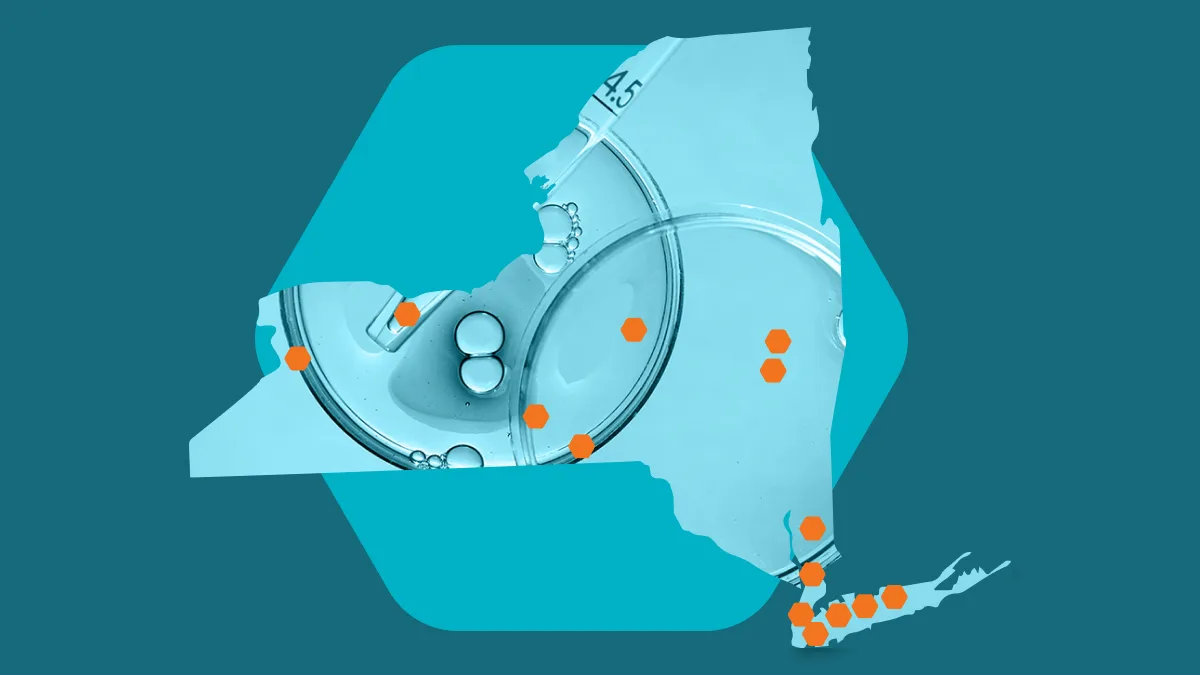




Cure
Overview
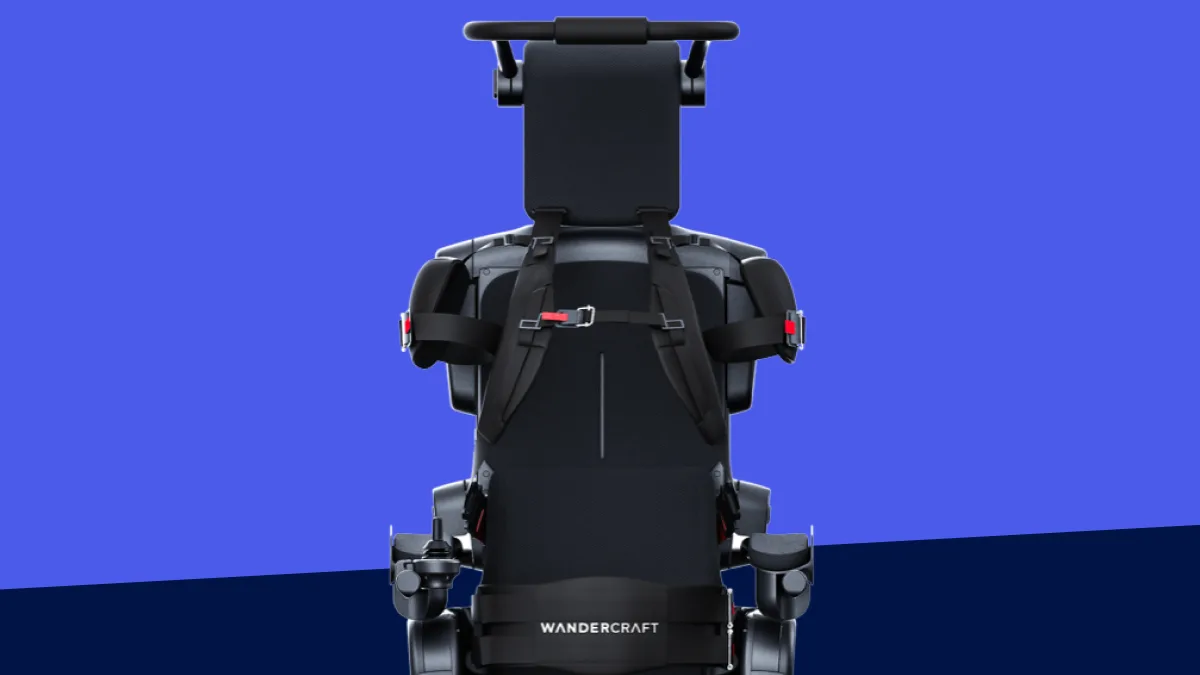
Wandercraft’s Eve brings self-balancing mobility out of the clinic for the first time, testing whether hands-free walking can become a practical part of daily life.
For more than a decade, exoskeletons that balance themselves stayed inside rehabilitation centers and research labs, while the personal exoskeletons cleared for the home still required their users to steady themselves on crutches or a walker. Wandercraft’s Eve is the first device to do both. In August, the FDA cleared the device for home use, the third personal exoskeleton approved for eligible users in the United States and the first that balances itself.
Eve is cleared for adults with spinal cord injuries at any level who can operate the device's remote control. A resident company at the Cure healthcare innovation campus in New York, Wandercraft launched Eve commercially on the US market on Sept. 17. CEO Matthieu Masselin said that hundreds of people had already expressed interest in the device ahead of launch.
Cutting the On-Ramp From Months to a Week
The clearance matters commercially because of how quickly a user can get into the device. Personal exoskeletons have typically required several months of training before someone can take one home, a practical barrier that has held back adoption. Wandercraft says that operating Eve can be learned in five two-hour sessions, potentially within a single week, though the timeline can run longer depending on the user.
“We've decreased training time by one order of magnitude, at least,” Masselin said. “Typically 12 weeks to one.”
The reason is the self-balancing system itself. “They don't have to learn what it takes to balance in that system,” said Nicholas Evans, PhD, a research scientist and manager of Shepherd Center's Human Performance Laboratory, who has studied Atalante X alongside other exoskeleton systems. “They don't need to learn how to navigate moving a walker or a set of crutches while also getting the device to move.” Self-balancing, he said, shifts more of the physical and cognitive work from the user to the machine.
Evans, who has spent nearly 20 years working with people with spinal cord injuries, called Eve “fantastic if you want to really streamline the user experience and get them in there as quickly as possible.” He was careful to add that every system involves trade-offs. Not everyone prefers a passive self-balancing machine: through his research, some users wanted a more interactive system that demands more physical effort and offers the sense they could get a workout. “Different people prefer different types of systems depending on their needs and interests.”
The Problem Self-Balancing Solves
The value of that becomes clear against the devices that came before. In 2014, ReWalk became the first powered exoskeleton cleared by the FDA for personal use, followed by Indego in 2016. Both brought exoskeletons into homes and communities, but users still relied on crutches or walkers for stability. Balance-related falls have been a documented risk: in one case reported to the U.S. Food and Drug Administration (FDA), a ReWalk user lost balance and fell while turning toward a staircase.
That is the challenge self-balancing machines like Eve are built to solve, shifting the burden of staying upright from the person to the device. Eve uses self-balancing technology and real-time control to adapt to the user's movements while standing and walking.
A Machine Built Around the Person
Wandercraft spent more than a decade developing the software, AI, and hardware behind the system. “Walking on two legs is a very difficult problem,” Masselin said.
The machine also has to fit the person. Eve has hundreds of configurations based on factors including leg length, body shape, and joystick placement. “Patients are unique,” Masselin said. “This may seem obvious, but the shape of the back of every patient is different.”
That lesson carried over from Wandercraft's work on Atalante X, its self-balancing rehabilitation exoskeleton, used in more than 150 rehabilitation and research centers worldwide. Eve is designed to complement a wheelchair rather than replace it, at least for now. Masselin said the company may eventually want to replace wheelchairs, but for the foreseeable future Eve is “another option that we offer to people who want to take it.”
The clinical case for standing goes beyond mobility. Standing and weight-bearing can support circulation, improve cardiovascular function, and relieve pressure on areas vulnerable to skin problems. In the clinical trial behind the clearance, participants also reported improvements in day-to-day measures including endurance, lower-limb spasticity, and sitting balance, with some reporting better sleep quality and bladder and bowel function.
The Real-World Test Starts Now
Wandercraft's clearance was based on clinical trials involving people with spinal cord injuries and their companions, testing everything from safety and function to training, usability, and readiness for personal use. Evans sees the bigger challenge as the technology moves beyond controlled environments.
“The carryover effects from those more confined training approaches that exoskeleton technologies offer don't seem to carry over as well as doing something more dynamic that replicates the specific activities that people will encounter in the real world,” Evans said.
Masselin said testing cannot fully predict what happens once Eve enters someone's daily routine. “You're never able to test your technology the same way users test your technology,” he said. Over the next six months, Wandercraft wants to learn “what the users are actually doing with our products,” including the situations engineers never anticipated.
Getting Eve into homes will also require clinical assessment, individualized fitting, and trial and training of the user and a designated companion. Medicare currently has a reimbursement pathway for eligible personal exoskeleton users under K1007.
At about $100,000, Eve is still a significant purchase. Evans called the price “actually pretty competitive,” noting that the other FDA-cleared, commercially available exoskeletons in the United States run around six figures or more.
Whether this moment becomes an inflection point is still an open question. “It's hard to predict the future,” Evans said. “I still think we're quite a few years away from having devices that could practically replace wheelchairs and other mobility tools that are just faster and more cost effective.”