



Cure
Overview
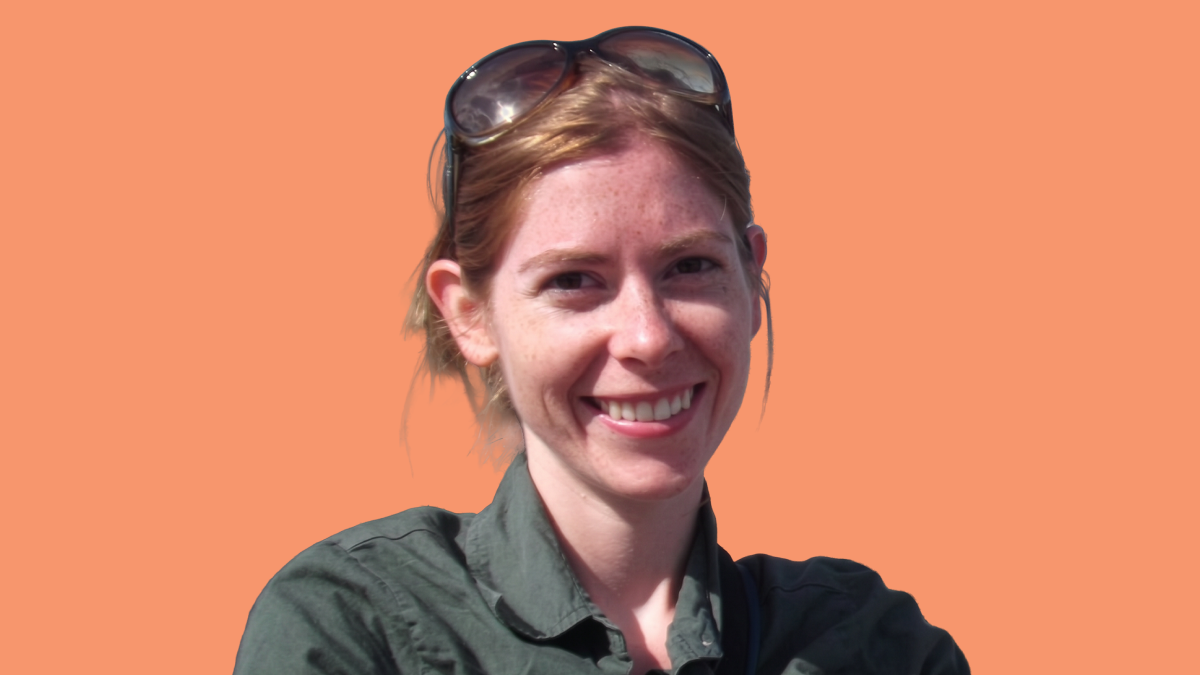
After 20 years of misdiagnosis, Tamar Zelovich-Hod used the pattern-finding methods from her quantum chemistry research to identify her own endometriosis, then built them into SymptoLab, a decision-support tool for physicians.
Tamar Zelovich-Hod, PhD, spent years searching for patterns in theoretical quantum chemistry. She never expected the next system she'd analyze would be her own body.
Zelovich-Hod, the cofounder and CEO of women's health startup SymptoLab and a participant in Cornell Tech's Runway Startup Postdoc Program, moved to New York about a decade ago for a postdoctoral fellowship at NYU.
During that time, her health deteriorated. She says she eventually spent about two years largely limited to her home, managing physical limitations and symptoms that doctors struggled to explain.
What began as a personal search for answers became the foundation for her company. SymptoLab builds software that helps physicians find cyclic symptom patterns tied to hormonal fluctuations. It generates a personalized algorithm for each patient, mapping which symptoms track to which point in the hormonal cycle, then surfaces correlations a doctor might otherwise miss. The company is starting with endometriosis and plans to extend the same approach to other hormone-driven conditions, including fertility.
"It wasn't a point in time," Zelovich-Hod said, describing her decision to transition from researcher to entrepreneur. "It was a process."
Turning Her Research Methods on Her Own Body
Before launching a startup, Zelovich-Hod planned to stay in academia. She earned a PhD in theoretical quantum chemistry, and later completed a postdoctoral fellowship studying ion diffusion patterns in fuel cell devices. At the same time, her health was deteriorating.
She says she gradually lost the ability to eat, walk, and sometimes even speak. She was given a growing list of diagnoses over time, but none of them turned out to be correct. So she turned her research skills on herself.
"I started using the same methodology, same idea of looking for patterns in my own symptoms," she said.
Her symptom patterns reminded her of the hormonal cycles she remembered from before she started birth control. She pursued that lead, and she says surgery eventually confirmed what she suspected: endometriosis.
Endometriosis is a disease that occurs when tissue similar to the uterine lining grows outside the uterus, causing chronic pain, fatigue, infertility, and other symptoms. It affects roughly 1 in 10 women of reproductive age worldwide, yet many patients spend years seeking a diagnosis because symptoms are often mistaken for other conditions.
Zelovich-Hod says her health gradually improved over time, though she doesn't consider herself fully healthy. After 20 years of misdiagnosis — including two especially debilitating years — the endometriosis diagnosis explained the root cause. She continued using the same pattern-tracking methodology afterward, mapping which point in her hormonal cycle triggered which symptoms, even while on birth control with no visible period. That work helped her physicians correctly diagnose conditions that were, in fact, flares of her underlying endometriosis.
She and her brother, Alon, who became SymptoLab's cofounder, first tested the methodology themselves with about 25 patients before building it into software.
“The biggest breakthrough was seeing that first group of patients consistently track their symptoms using our methodology, and tell us it helped them better understand their condition - and that they wanted to keep going after we stopped," she said. "That was the first indication that we were building something people truly valued.”
Why Good Science Wasn’t Enough
Coming from academia, Zelovich-Hod assumed that proving the science would naturally lead into a viable, marketable product.
"I thought, if it's a good idea and it will work and patients will have a better life, then it has to work," she said. "Why wouldn't it be easy to bring something like that to market?"
Instead, she discovered that building a company required solving a completely different set of problems.
Clinical studies take months. Regulatory approvals can take months more. Investors often want larger datasets before funding the next phase, while those larger datasets require funding to collect in the first place.
"Everyone told me, 'You're a scientist. You don't know anything in business,'" she said. "I actually almost believed them."
Today, SymptoLab is preparing several pilot programs, including two large pilots that Zelovich-Hod says will run at NewYork-Presbyterian and NYU Langone. She says raising capital continues to shape many of the company's decisions, as the team works to translate pilot results into its next funding round.
Funding isn't the company's only obstacle. Women's health presents another one.
Despite affecting half the population, women's health has historically attracted a small share of healthcare investment. For example, femtech companies receive just about 2% of all healthcare venture funding, according to analyses of PitchBook data.
Zelovich-Hod says investors sometimes question whether endometriosis represents a large enough market. When she explains that the same scientific platform could eventually support fertility and other hormone-driven conditions, she says some instead argue that the opportunity is too broad.
In other words, a focused vision can seem too niche to attract investors, while a broader vision can be dismissed as overly ambitious.
"I'm always wondering: if a man said that, would they get the same answer?" she said.
The Scientist-CEO Problem
One of the biggest turning points came when SymptoLab joined Cornell Tech's Runway Startup Postdoc Program, which helps researchers commercialize scientific discoveries.
Zelovich-Hod credits the program with helping her understand investors, customers, and business strategy without abandoning the scientific approach that made the company possible in the first place.
Instead of viewing science and entrepreneurship as competing skills, she now sees them as complementary.
"I realized that it's not a weakness, being the scientist and the CEO,” she said. “It's actually the strength of this company, because this company is built on science and the algorithm and what we do. That's what makes us different.”
Beyond a Symptom Tracker
SymptoLab isn't broadly available yet. Zelovich-Hod says patients currently use the platform only through physician-led pilot programs because she believes clinicians need to help interpret the information. She expects broader access after additional pilots generate more data.
Zelovich-Hod doesn't see SymptoLab as another symptom-tracking app. She hopes it becomes part of how physicians approach complex hormone-driven conditions.
“I hope people will say that SymptoLab changed the way we care for women by teaching healthcare to look at the female body as a whole. Hormones influence almost every system in the body, yet medicine often treats symptoms and conditions in isolation instead of recognizing how they're connected,” she said.
Zelovich-Hod spent years trying to make sense of symptoms no one could explain. She wants physicians to have a tool that will help the next woman spend less time looking for answers than she did.
“Ultimately, I want women's health to be approached as an interconnected system, not a collection of separate diseases.”