


Cure
Overview
China out-publishes America’s elite universities in every frontier field, but the Ivies and peers like Stanford and MIT still lead on influence and industry ties.
American universities have led the world in biomedical research for a generation. That lead is no longer secure. Over the past two decades China has gone from a marginal player to a near-peer, and it has closed the gap on sheer output: the research institutions in each country now publish about 43,500 biomedical papers a year. On the measures that decide who turns discoveries into treatments, China is moving even faster. In Cure’s 2026 survey, 85 percent of senior industry and academic leaders said America’s overall lead in biotech would last 10 years or less.
The next phase of that competition is turning discoveries into drugs, and there the two countries have divided the work. American science carries more influence and deeper industry ties. China develops medicine faster, cheaper, and at a greater scale.
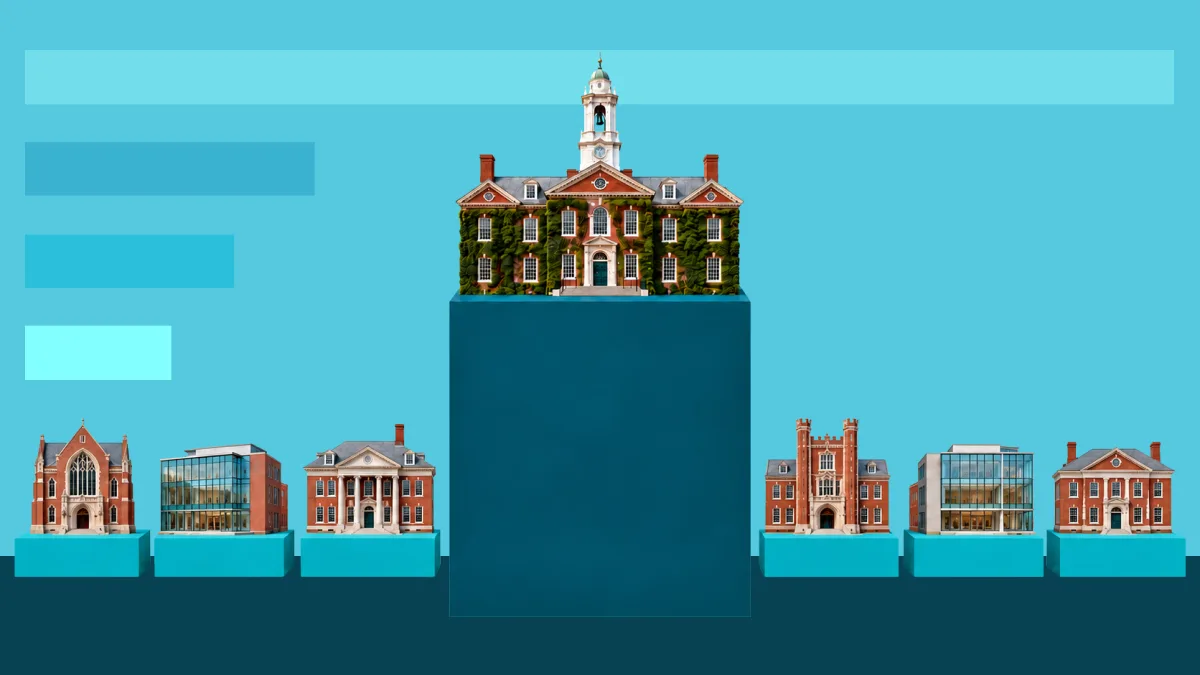
So how are America’s most elite schools holding up? Consider 13 of the country’s most prominent research universities, the Ivy League along with peers like Stanford, MIT, and Johns Hopkins. In the fields expected to produce the next generation of medicines, even these schools are being out-published. China’s top institutions produce five to 11 times as many papers across gene editing, cell therapy, RNA therapeutics, and AI drug discovery. Counted by paper, the race in these fields is not close.
Where the Ivies Still Lead
But when it comes to influence, the picture flips. These schools hold two advantages that matter most once a discovery is made. The first is reach. Their papers get cited more often than China’s in all four frontier fields: 16 percent more in gene editing, 35 percent in RNA therapeutics, 46 percent in cell therapy, and 55 percent in AI drug discovery. The strength runs deepest at MIT, whose AI drug-discovery papers rank among the most cited in the world, nearly nine times the benchmark for a typical research paper.
The second is industry connections. These schools also co-author with company scientists at more than twice China’s rate. That kind of collaboration tends to come before patents, spinouts, and licensing deals, and it is a rough measure of how deeply a university’s research is tied to the companies that turn it into products. Both findings come from a Cure Innovation Index analysis of publication data from 2020 through 2024.
This isn’t to say that China’s best institutions aren’t gaining ground in influence. Papers from Tsinghua University, the country’s top school for science and engineering, now get cited about as often as those from the top American research institutions overall. Its rate of publishing with industry has climbed since 2020, while the Chinese national average has stayed flat.
Why China Is Catching Up on Trials
Clinical development is where China has moved fastest. Its share of global trial starts climbed from one percent in 2009 to 32 percent last year, just behind the United States. Chinese programs also run early trials faster and at lower cost.
America’s weakness here is capacity. Running an early-phase trial takes dedicated infrastructure, from specialized units to trained staff. The NIH pays for that at only a fraction of research universities, through its Clinical and Translational Science Award. Schools with the award run dozens of early-phase trials a year, while those without it run about one.
The shortage reaches even the strongest universities. Eleven of the 13 hold the award, yet only Stanford and Columbia rank high on both research influence and trial volume. Harvard and MIT lead on the science but run most of their trials through separately chartered hospitals, which the Index credits elsewhere. Excelling at both the research and the testing turns out to be rare.
The United States will keep losing early trials to countries like China, the Reagan-Udall Foundation for the FDA warned in June. Chinese firms now account for about a third of the new compounds entering the American drug pipeline.
What It Will Take
For now, the most influential biomedical research still comes out of American universities. But China is closing the distance on every front, and the trial gap is already sending drug development abroad.
The response is not to try to out-publish China, a race the volume numbers suggest is already lost. It is to protect what these schools do best and shore up what they don’t. That starts with the federal research funding that built the influence lead in the first place. A research advantage, once lost, takes decades to rebuild, while trial capacity can be built in a few years. It means expanding early-phase trial infrastructure so the institutions generating frontier science are also the ones testing it, a pairing only Stanford and Columbia manage today. And it means treating deep industry ties, still America’s clearest edge, as an asset to widen rather than take for granted.
It also means engaging with China rather than retreating from it, particularly as AI speeds the path from discovery to drug.
Download the full China vs. US Biomedical Scorecard report to explore the data.
A note on methodology: Publication volume and citation comparisons weigh each country’s 10 highest-volume institutions in each frontier field. Not all 13 schools fall in the top 10 of every field.